





What sealing structure should be adopted for oil-immersed transformers?

ホーム > FAQ > ページ 31
FAQ

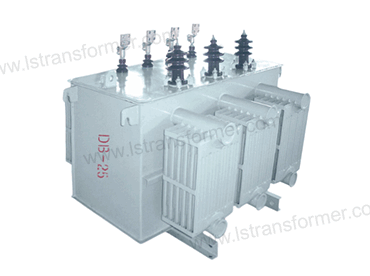
What sealing structure should be adopted for oil-immersed transformers?

What sealing structure should be adopted for oil-immersed transformers? Oil-immersed transformers play a crucial role in power systems, with their sealing performance directly impacting the operational reliability and lifespan of the transformers. The rationality and effectiveness of the sealing structure design are key factors in ensuring that the internal oil does not leak and external moisture does not penetrate the transformer. This article will discuss in detail the sealing structures that should be adopted for oil-immersed transformers. 1. Control of Compression Amount for Rubber Seals The sealing of oil-immersed transformers typically employs rubber seals, which achieve the sealing effect through the elasticity of the rubber. However, the compression amount of
FAQ

Why Is Harmonic Governance Ineffective? — Key Solutions for Reactor and Capacitor Mismatch

Why Is Harmonic Governance Ineffective? —Key Solutions for Reactor and Capacitor Mismatch As industrial power systems grow more complex, harmonic pollution has become a critical issue leading to equipment failures and energy inefficiency. According to the International Energy Agency (IEA), approximately 28% of global industrial power systems suffer energy efficiency losses exceeding 15% due to improper harmonic governance, resulting in annual economic losses of $12 billion. Standards like IEC 61000-3-6 (harmonic current emission limits) and IEEE 519-2022 (harmonic control guidelines) identify mismatched reactors and capacitors as a primary cause of harmonic governance failure. This article analyzes global case studies and technical standards to debunk common myths and provide systematic solutions,

FAQ

How to Maintain High Performance in Compact Reactor Design? — Key Innovations for High-Frequency Inductors

How to Maintain High Performance in Compact Reactor Design? —Key Innovations for High-Frequency Inductors The demand for miniaturized reactors (or compact reactors) is surging at an annual rate of 15%, driven by rapid growth in renewable energy, 5G telecommunications, and data centers (MarketsandMarkets, 2023).However, shrinking reactor size by 40%-60% poses significant challenges in balancing efficiency, thermal management, and reliability. According to IEC 62025 (high-frequency inductor standards) and IEEE 1812 (electromagnetic component design guidelines), optimizing performance requires breakthroughs in three key areas: advanced materials, thermal management, and structural design. This article explores cutting-edge solutions and global case studies to help manufacturers achieve 20% higher efficiency and 15°C lower temperature rise in

FAQ

Why Does Your Factory’s Electricity Bill Remain Sky-High? —Hidden Costs of Transformer Power Loss Explained

Why Does Your Factory’s Electricity Bill Remain Sky-High? —Hidden Costs of Transformer Power Loss Explained Industrial electricity bills often hide a critical culprit: transformer power loss, which accounts for 20%-30% of energy costs. According to the International Energy Agency (IEA), global industrial transformers waste over 200 billion kWh annually—equivalent to Germany’s total yearly consumption. Yet, many factory managers overlook the root causes and solutions. This article reveals how to tackle transformer inefficiencies and slash your energy expenses. Content 1. No-Load Losses: The Silent Energy Drain No-load losses occur when transformers run idle, primarily due to core losses in the iron core. These include: (1) Hysteresis Loss: Caused by magnetic reversal in

FAQ

What If Your Transformer Capacity Is Too Small? — Emergency Fixes & Long-Term Optimization

What If Your Transformer Capacity Is Too Small? —Emergency Fixes & Long-Term Optimization Discover emergency fixes for overloaded transformers, including parallel units & dynamic load control, plus permanent solutions compliant with IEC 60076-7 and IEEE 519-2022. Boost SEO with keywords like transformer overload solutions and harmonic distortion mitigation. As global industrial power demands skyrocket, undersized transformers have become a hidden cost trap. According to the International Energy Agency (IEA), 35% of industrial blackouts stem from overloaded transformers, causing annual losses exceeding $12 billion in developing nations. Prolonged overloads slash transformer lifespan by 50-70% (per IEC 60076-7 and IEEE C57.91) and even trigger fire hazards. Below, we break down the root

FAQ

Does Transformer Overheating Affect Service Life? — Analyzing Temperature Rise Mechanisms and Intelligent Cooling Solutions

Does Transformer Overheating Affect Service Life? —Analyzing Temperature Rise Mechanisms and Intelligent Cooling Solutions Transformer overheating costs global industries over $12 billion annually. According to the International Electrotechnical Commission (IEC), exceeding the rated temperature by 8°C cuts transformer lifespan by 50%. China’s Ministry of Industry and Information Technology has enforced stricter temperature limits (e.g., winding ≤98°C) in its Transformer Energy Efficiency Plan (2023-2025). This article combines the IEEE C57.91 thermal aging model and global case studies to explain how overheating damages transformers and highlights cost-saving strategies through smart cooling technologies. Content 1.How Overheating Destroys Transformer Lifespan: From Insulation Aging to Thermal Breakdown (1) Insulation Material Degradation:  Temperature accelerates insulation deterioration.

FAQ

Do you know what is the common winding process of transformer winding?

Do you know what is the common winding process of transformer winding? Transformer winding is the core part of transformer, and its winding process directly affects the performance and quality of transformer. Several commonly used transformer winding winding processes and their characteristics will be described below. Content 1. Layer winding process Layer winding is to wrap the wire layer by layer on the iron core, and each layer is separated by insulating material. This process has the advantages of simple structure, easy to manufacture, and small interlayer capacitance, which is conducive to reduce electrical faults. However, layered windings may lead to a large interlayer voltage gradient in high voltage and

FAQ

Do you know about the life loss and life management of transformers?

Do you know about the life loss and life management of transformers? Transformer is an indispensable and important equipment in the power system, and its life management is of important significance for ensuring the stable operation of the power system. Transformer life loss and life management will be described below: Content 1. Life loss factors The life loss of transformer is mainly affected by many factors. The first is the overload operation, long time overload will cause coil heating, accelerate insulation aging. Secondly, the temperature is too high, which will accelerate the aging rate of insulation materials and shorten the life of the transformer. In addition, environmental factors such as

FAQ

Do you know the insulation structure of the transformer?

Do you know the insulation structure of the transformer? Transformer is the core equipment in the power system, and its insulation structure is very important to ensure the safe and reliable operation. The insulation structure is designed to prevent current leakage, electrical breakdown and ensure electrical isolation between components. The several main insulation structures of the transformer will be described in detail below: Content 1. Winding insulation Winding insulation is the most basic form of insulation inside the transformer, which is wrapped in the outside of the winding wire, to prevent the electrical short circuit between different turns or layers. Winding insulation is usually made of materials such as insulating

FAQ

Insufficient Space for Transformer Installation? —Comprehensive Analysis of Compact Power Transformer Solutions

Insufficient Space for Transformer Installation? —Comprehensive Analysis of Compact Power Transformer Solutions Amid global urbanization and the integration of renewable energy, “insufficient transformer installation space” has become a critical challenge for commercial complexes, underground substations, and offshore wind projects. Traditional distribution transformers, constrained by material limitations and structural redundancy, often suffer from oversized dimensions (e.g., 2500kVA units exceeding 3m in height). This article systematically analyzes four technical pathways for compact solutions based on IEC 60076 and IEEE C57.12 standards, supported by global case studies. Content 1. Root Causes of Oversizing & Breakthroughs in Material Science 1.1 Core Material Evolution: From Silicon Steel to Amorphous Alloys 1.1.1 Current Challenges: Conventional silicon

WhatsAppにQR WeChat QR sales@hnlsdz.com
スクロールトップ