






Copper vs Aluminum Winding Transformers: Key Differences Beyond Cost
Copper vs Aluminum Winding Transformers: Key Differences Beyond Cost
In global power infrastructure and industrial applications, transformers are critical equipment where performance and reliability are paramount. The choice between copper-wound and aluminum-wound transformers often presents a dilemma for engineers, procurement decision-makers, and project planners. This decision is far more than a simple cost comparison; it involves a comprehensive evaluation of efficiency, service life, reliability, and total lifecycle value. This guide delves into the fundamental differences between the two materials, helping you make a choice that aligns with international standards and long-term benefits—perfect for your transformer selection guide.
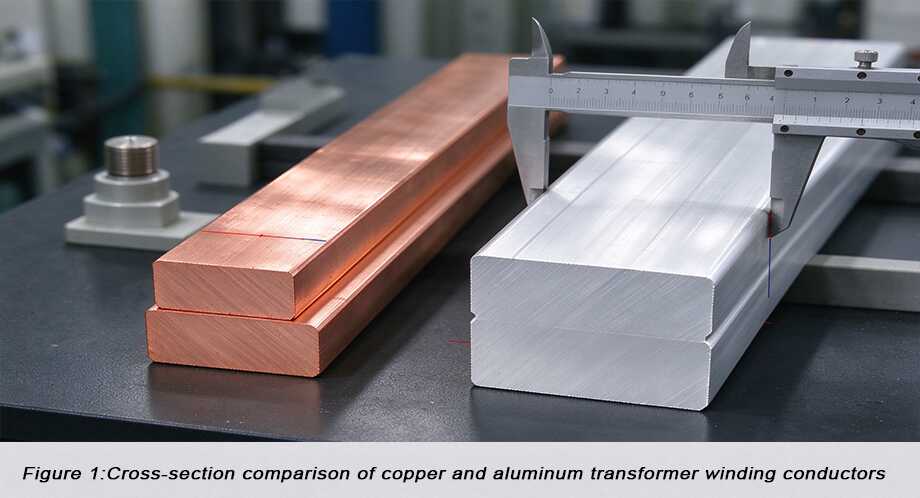
1. Conductivity and Energy Efficiency: A Fundamental Difference
The core function of a transformer is efficient power transmission. The conductivity of the winding material directly determines its energy loss and operational efficiency.
(1)Copper Windings offer exceptional electrical conductivity.
With a conductivity of approximately 58.0 MS/m (per IEC 60028), copper is the highest among common industrial metals. In a transformer, lower resistance means I²R losses (resistive losses) are minimized under the same load. These losses convert directly into heat, wasting energy and increasing operating temperature. According to standards like IEEE C57.120, a copper winding transformer typically exhibits 15%-25% lower load losses compared to an equivalent aluminum winding transformer.
(2)Aluminum Windings have a conductivity of about 35.5 MS/m
roughly 61% of copper’s. To achieve comparable current-carrying capacity, an aluminum conductor must have a cross-sectional area approximately 1.6 times larger than copper. This impacts winding design, often resulting in bulkier windings that can affect core window utilization. While increased size lowers resistance, it also introduces challenges for space and thermal management.
(3)The Bottom Line for Efficiency:
The choice of material directly impacts transformer efficiency and running costs. For projects prioritizing high energy efficiency and reduced carbon emissions, the lower losses of copper windings provide a significant long-term advantage.
2. Thermal Performance and Long-Term Reliability: Core Factors for Lifespan
A transformer’s service life is heavily influenced by thermal aging. Insulation materials degrade over time when exposed to sustained high temperatures.
(1)Copper’s Thermal Advantage:
Copper has a high thermal conductivity (~400 W/(m·K)), significantly greater than aluminum’s (~235 W/(m·K)). This means heat generated in copper windings is dissipated more rapidly to the cooling medium (oil or air), resulting in a lower hot spot temperature. According to Montsinger’s Rule, the aging rate of insulation is approximately exponential with temperature. Even a 5-10°C reduction in operating temperature can extend a transformer’s service life by several years.
(2)Aluminum’s Thermal Challenge:
Due to lower conductivity, aluminum windings inherently generate more heat under the same load, and their slightly lower thermal conductivity can hinder heat dissipation. This can lead to higher temperature rises during continuous or overload conditions. Elevated temperatures accelerate the aging of insulating oil and may increase the risk of creep in aluminum—a slow deformation under mechanical and thermal stress that can compromise connection integrity over decades.
(3)The Bottom Line for Reliability:
Superior thermal performance is key to transformer reliability. By maintaining lower operating temperatures, copper windings inherently slow the insulation aging process, enhancing long-term reliability and reducing potential failure rates.
3. Mechanical Strength and Connection Reliability: The Foundation of Safe Operation
Transformer windings endure electromagnetic forces and thermal cycling. The stability of connection points is critical for safe operation.
(1)Copper’s Mechanical Strength:
Copper possesses higher tensile strength and excellent ductility. Copper connections (welded or bolted) are more resistant to creep over time, maintaining stable contact pressure. This ensures a stable, low contact resistance, which is essential to prevent localized overheating and thermal failures.
(2)Aluminum’s Connection Considerations:
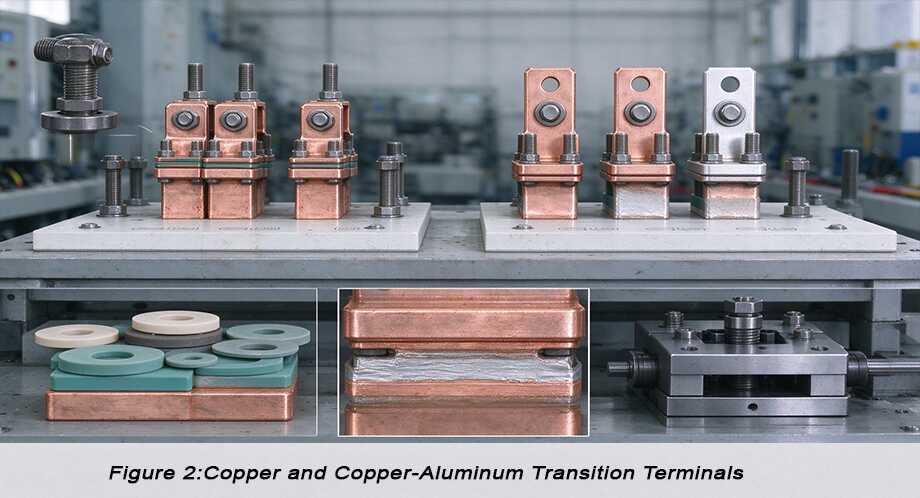
Aluminum is softer and more prone to creep. This is particularly critical at aluminum-copper or aluminum-steel interfaces (common at terminals). Differences in thermal expansion coefficients and aluminum’s softening can lead to reduced contact pressure after thermal cycling, increasing contact resistance and creating hotspots. Mitigating this requires more precise connection techniques (e.g., special washers, antioxidant compounds) and potentially more frequent maintenance inspections.
(3)The Bottom Line for Safety:
Stable mechanical properties ensure connection integrity over the transformer’s lifespan. Choosing a material with high creep resistance, like copper, enhances connection reliability and the overall safety margin of the installation.
Comparison and Selection Guidelines
| Performance Aspect | Copper Winding Transformer | Aluminum Winding Transformer | Key Consideration |
| Conductivity & Efficiency | Very High. Typical efficiency >98%. Lower energy loss. | Moderate. Requires larger cross-section. Higher inherent loss. | Critical for high-load, high-energy-cost applications. |
| Thermal Performance & Lifespan | Excellent heat dissipation. Lower operating temperature extends life. | Requires careful thermal design. Higher operating temperature may impact longevity. | Vital for reliability and reducing lifecycle cost. |
| Mechanical & Connection Reliability | High strength, creep-resistant. Stable, low-resistance connections. | Softer material. Connections require careful design and maintenance. | Essential for long-term safety and reduced maintenance. |
| Initial Investment Cost | Более Высокий | Более низкий | Often the primary driver for aluminum selection. |
| Total Lifecycle Cost (LCC) | Often more economical in high-load, high-electricity-cost scenarios due to lower losses. | May be economical in low-load, low-utility-cost scenarios with low initial budget. | Requires detailed transformer lifecycle cost analysis. |
| Sustainability | Very high recycling value and excellent recyclability. | Lower recycling value, but primary production can be less energy-intensive. | Depends on local recycling infrastructure and energy mix. |
The following table summarizes the key differences to guide your transformer buying decision:
Conclusion: A Strategic Approach to Selection
Choosing between copper and aluminum windings requires moving beyond initial price to adopt a strategic approach based on international standards (IEC, IEEE) and lifecycle assessment.
Choose Copper Windings for: Applications with high load factors, continuous operation, high electricity costs, or extreme reliability demands. This includes data centers, critical industrial processes, hospitals, and premium commercial buildings. The long-term value in efficiency, longevity, and reduced downtime aligns with global best practices for energy-efficient transformers.
Aluminum Windings can be a viable economic solution for: Applications with low or intermittent load, very low electricity costs, or severely constrained initial budgets. If selected, ensure the design complies with standards like IEC 60076, employs meticulous connection techniques, and includes a proactive maintenance plan.
Regardless of your material choice, ensure your transformer supplier adheres to ISO quality management systems, provides products tested to IEC or IEEE standards, and offers transparent efficiency and loss data. In an era of rising energy efficiency standards (like the EU Ecodesign Directive) and the push for carbon neutrality, investing in efficient, long-lasting equipment is not just an economic decision but an investment in future sustainability and operational resilience.
Контакты
Компания LuShan, основанная в 1975 году, является китайским профессиональным производителем, специализирующимся на силовых трансформаторах и реакторах более 50 лет. Ведущими продуктами являются однофазный трансформатор, трехфазные изолирующие трансформаторы, электрический трансформатор, распределительный трансформатор, понижающий и повышающий трансформаторы, низковольтный трансформатор, высоковольтный трансформатор, управляющий трансформатор, тороидальный трансформатор, R-образный трансформатор; катушки индуктивности постоянного тока, реакторы переменного тока, фильтрующий реактор, линейный и нагрузочный реакторы, дроссели, фильтрующий реактор и промежуточные высокочастотные продукты.
Наши силовые трансформаторы и реакторы широко используются в 10 областях применения: скоростной транспорт, строительная техника, возобновляемые источники энергии, интеллектуальное производство, медицинское оборудование, предотвращение взрывов в угольных шахтах, системы возбуждения, вакуумные печи спекания, центральное кондиционирование воздуха.
Узнайте больше о силовом трансформаторе и реакторе: www.lstransformer.com.
Если вы хотите получить индивидуальные решения для трансформаторов или реакторов, пожалуйста, свяжитесь с нами.
WhatsApp: +86 13787095096
Электронная почта: marketing@hnlsdz.com

