


Offshore Wind Transformer Lead Wires: Tin-Plated or Silver-Plated —Which Is Better?
Offshore Wind Transformer Lead Wires: Tin-Plated or Silver-Plated
—Which Is Better?
Amid the roaring winds of the open ocean, offshore wind farms are becoming a cornerstone of the global green energy landscape. However, to efficiently and reliably transport massive amounts of clean electricity over tens or even hundreds of kilometers back to land, the material choice for transformer high-voltage lead wires—this “power lifeline”—directly determines system reliability and cost-effectiveness. This article delves into the scientific principles and engineering practices behind this critical decision.
Содержание
1. Extreme Environmental Challenges: Why Lead Wire Coating Is the Lifeline of Offshore Wind?
1.1 Offshore wind transformers operate in one of the harshest electrical environments on Earth:
(1)High salt spray corrosion (salt spray corrosion):Chloride-rich sea breezes accelerate electrochemical metal corrosion (simulated per IEC 60068-2-52 standards).
(2)Persistent high humidity (high humidity): Relative humidity consistently ≥80%, exacerbating moisture penetration and oxidation.
(3)Severe thermal cycling (thermal cycling): Operational heating (up to 80°C+) and shutdown cooling cause repeated material expansion and contraction.
(4)High-voltage stress (high voltage stress): System voltages of 66kV to 220kV+ demand exceptional insulation and contact integrity.
1.2 The lead wire connection points are vulnerable in electrical systems. Coating quality directly impacts:
(1)Contact resistance stability (Contact Resistance Stability): Affects power transmission efficiency and localized heating.
(2)Corrosion resistance (Corrosion Resistance): Ensures long-term conductive pathway integrity, preventing failure.
(3)Mechanical wear resistance (Mechanical Wear Resistance): Withstands vibration and insertion/removal wear.
| Performance Requirement | Failure Risk | Potential Consequences |
| Low and stable contact resistance | Increased resistance, overheating (Joule Heating) | Accelerated aging, insulation failure, fire risk |
| Superior salt spray corrosion resistance | Coating perforation, base material rust (typically copper) | Contact failure, arcing, power loss |
| Good solderability/crimpability | Poor soldering, loose connections | Intermittent contact, overheating, arcing |
| Fretting wear resistance | Coating wear, oxide formation | Sharp rise in contact resistance, severe heating |
2. Tin vs. Silver: Performance Showdown in Deep-Sea Environments
2.1 Electrical Conductivity and Contact Resistance
(1)Silver wins:
Silver boasts the highest volumetric conductivity (~63 MS/m) of all metals. Crucially, its oxide (Ag₂O) remains conductive! Even with slight surface oxidation, contact resistance stays low and stable—especially under high current.
(2)Tin’s limitations:
Pure tin’s conductivity (~9 MS/m) is far lower than silver. Tin oxide (SnO₂) is an insulator. Under high voltage and micro-vibrations, tin coatings form insulating oxide layers, causing unstable and rising contact resistance. Per Holm’s contact theory, actual contact points are few and tiny, with resistance (Rc) approximated as:
Rc ≈ ρ / (2 * sqrt(A * n / π))
where ρ is resistivity,
A is apparent contact area
n is contact point count.
Silver’s low ρ and oxidation resistance ensure lower, more stable Rc.
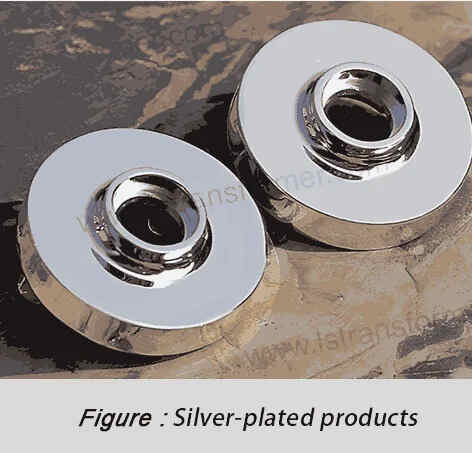
2.2 Corrosion Resistance (Corrosion Resistance)
2.2.1 Tin’s practicality:
Tin resists atmospheric corrosion well, protecting copper bases from uniform corrosion at a lower cost.
2.2.2 Silver’s challenges & solutions:
Silver reacts with sulfur (S) to form insulating black silver sulfide (Ag₂S). Offshore H₂S exposure is possible, but engineers mitigate this via:
(1) Thicker coatings: ≥8 μm for offshore use (vs. standard 3-5 μm), delaying sulfide penetration (IEC 62626).
(2) Silver alloys:Adding tin, indium, etc., for sacrificial anode protection.
(3) Composite coatings: Nickel underlayers (Ni ≥5 μm) provide dual barriers (meeting IEC 61238 requirements).
(4) Salt spray resistance: Dense silver coatings resist chloride (Cl⁻) corrosion excellently (ASTM B117 salt spray test ≥500 hours).
2.3 Fretting Wear and Mechanical Performance (Fretting Resistance & Mechanical Properties)
(1)Silver excels: Soft and ductile, silver fills micro-gaps via plastic deformation under vibration (per IEEE 1247 tests), maintaining metal-to-metal contact and reducing wear-induced oxidation.
(2)Tin’s risks: Harder and brittle, tin generates debris or cracks under fretting, exposing fresh metal to rapid oxidation—spiraling resistance and heat.
2.4 Cost and Long-Term Value (Cost & LCC – Life Cycle Cost)
(1)Tin:Lower upfront cost (Capex). Ideal for low-voltage, near-shore, or easily maintained projects.
(2)Silver: Higher Capex (silver price + thick coatings). But its low energy loss (high conductivity), ultra-reliability (low failure rates), and minimal maintenance (reducing costly offshore Opex) make it indispensable for deep-sea projects. Requires Life Cycle Cost (LCC) analysis.
| Property | Tin (Sn) | Silver (Ag) | Offshore Suitability |
| Volumetric Conductivity | Low (~9 MS/m) | Very high (~63 MS/m) | Silver cuts transmission losses |
| Oxide Layer | Insulating (SnO₂) | Conductive (Ag₂O) | Silver ensures stable long-term contact |
| Salt Spray (Cl⁻) Resistance | Хорошо | Превосходно | Both viable; silver better |
| Sulfide (S, H₂S) Resistance | Хорошо | Needs thick coating (≥8μm) or alloy/composite (IEC 62626) | Silver requires protection |
| Fretting/Vibration Resistance | Moderate, high oxidation risk | Excellent, ductile | Silver reduces vibration failure |
| Upfront Cost (Capex) | Низкий | High (silver + thick coating) | Tin cheaper |
| Long-Term Opex | Higher (failures, frequent upkeep) | Very low (reliability, longevity) | Silver’s LCC advantage |
| Typical Use Cases | Low-voltage/near-shore/easy maintenance | High-voltage/deep-sea/high-reliability |
3. Engineering Decision Guide: Optimized Solutions via Life Cycle Analysis
Lead wire coating selection requires multidimensional evaluation. Modern practices employ tiered frameworks:
3.1 Voltage and Power Capacity Dictate Baseline Choice
3.1.1 HVDC (≥220kV): Mandatory silver plating. Skin effect (δ = √(ρ/(πfμ)) makes low resistivity critical for high-frequency loss reduction.
Examples: North Sea’s Dogger Bank (3.6GW), China’s Yangjiang (5.5GW).
3.1.2 AC Systems (33-66kV):
(1) Economy option: 5-8 μm tin with ≥100N/mm² spring contacts (IEC 60632) to break oxide layers.
(2) High-reliability: Silver-tin oxide (Ag-SnO₂) composites balance conductivity and arc resistance.
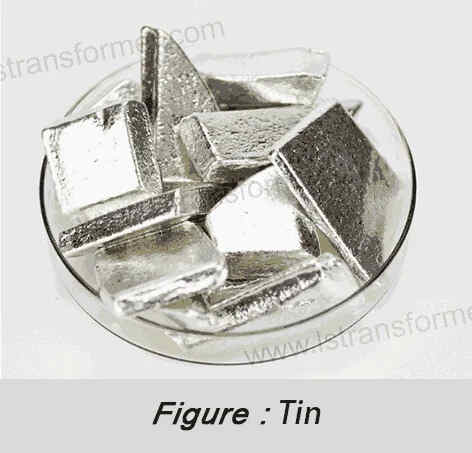
3.2 Corrosion-Level Strategies
3.2.1 ISO 12944 C5-M (Offshore >5km):
(1) Base:Silver + nickel barrier (Ni ≥5 μm) to prevent galvanic corrosion.
(2) Advanced:Nanocrystalline coatings via pulse plating (70% slower corrosion, ASTM B832).
3.2.2 ISO 12944 C4 (Near-shore <5km):
Option: Dense tin (≥12 μm) with silicone sealants (IEC 60893) and IR thermal monitoring (ΔT >15K alerts).
3.3 Connection Technology Matrix
| Connection Type | Tin Suitability | Silver Suitability | Key Controls |
| Bolted crimp | Fair (needs anti-ox paste) | Превосходно | Torque ±5% (EN 1435) |
| Laser weld | Poor (tin porosity) | Превосходно | Energy ≥10⁶ W/cm² |
| Cold crimp | Moderate (re-tighten) | Хорошо | 15-20% deformation |
| Diffusion braze | Unviable | Превосходно | Ag-Cu-Ti filler |
3.4 Life Cycle Cost Model (LCC)
LCC=Ccapex+∑t=120Copex(1+r)t+Pfailure×CdowntimeLCC=Ccapex+t = 1∑20(1+r)tCopex+Pfailure×Cdowntime
(1)Tin: Lower Capex but Pfailure ~1.2/year (€250k/repair).
(2)Silver:30-50% higher Capex, Pfailure <0.05/year.
Case study:UK 1GW project: Silver added €2.7M upfront but saved €11.3M Opex + €6.2M lost power over 20 years.
3.5 Best Practices:
(1)For >25km deep-sea, prioritize silver + laser welding.
(2)Near-shore: Hybrid tin/silver designs with FEM current distribution checks.
(3)All solutions must pass IEC 61400-25 offshore testing.
Подводя итог
While tin plating holds cost advantages for near-shore, low-voltage applications, silver plating emerges as the unrivaled choice for high-voltage, deep-sea systems—ensuring 25+ years of reliable operation with unmatched conductivity, passive contact stability, corrosion control, and fretting resistance.
As projects expand in the North Sea, China’s deep waters, and the U.S. Atlantic, global developers increasingly adopt high-performance silver solutions for offshore wind’s “power arteries.” The decision transcends upfront costs, embracing life cycle value—where silver’s reliability and efficiency continue to deliver strategic returns in the deep-sea frontier.
Контакты
Компания LuShan, основанная в 1975 году, является китайским профессиональным производителем, специализирующимся на силовых трансформаторах и реакторах более 50 лет. Ведущими продуктами являются однофазный трансформатор, трехфазные изолирующие трансформаторы, электрический трансформатор, распределительный трансформатор, понижающий и повышающий трансформаторы, низковольтный трансформатор, высоковольтный трансформатор, управляющий трансформатор, тороидальный трансформатор, R-образный трансформатор; катушки индуктивности постоянного тока, реакторы переменного тока, фильтрующий реактор, линейный и нагрузочный реакторы, дроссели, фильтрующий реактор и промежуточные высокочастотные продукты.
Наши силовые трансформаторы и реакторы широко используются в 10 областях применения: скоростной транспорт, строительная техника, возобновляемые источники энергии, интеллектуальное производство, медицинское оборудование, предотвращение взрывов в угольных шахтах, системы возбуждения, вакуумные печи спекания, центральное кондиционирование воздуха.
Узнайте больше о силовом трансформаторе и реакторе: www.lstransformer.com.
Если вы хотите получить индивидуальные решения для трансформаторов или реакторов, пожалуйста, свяжитесь с нами.
WhatsApp: +86 13787095096
Электронная почта: marketing@hnlsdz.com