How to Mitigate Skin Effect in High-Frequency Inductors? — Analysis of Litz Wire Braiding and Multi-Layer Winding Design

Preguntas frecuentes

How to Mitigate Skin Effect in High-Frequency Inductors? — Analysis of Litz Wire Braiding and Multi-Layer Winding Design

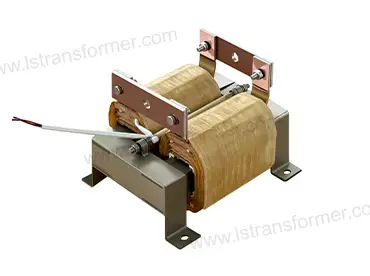
How to Mitigate Skin Effect in High-Frequency Inductors?  — Analysis of Litz Wire Braiding and Multi-Layer Winding Design In high-frequency power electronic systems such as switching power supplies, new energy inverters, and variable frequency drives, high-frequency inductors are the core magnetic components enabling efficient energy conversion. However, as operating frequencies rise to the kHz or

Preguntas frecuentes

Harmonic Control in Power Systems: Reactor Selection and Configuration

Harmonic Control in Power Systems: Reactor Selection and Configuration With the rapid development of industrial equipment, renewable energy power stations, and data centers, harmonic pollution in power systems has become increasingly severe. Harmonics not only cause transformer overheating and cable insulation aging but may also trigger serious accidents such as capacitor resonance explosions. Reactors, as

Preguntas frecuentes

How Do Power Transformers Work? —A Full Process Analysis from Power Generation to Consumption

How Do Power Transformers Work? —A Full Process Analysis from Power Generation to Consumption Power transformers are the core equipment of grid systems, performing the critical tasks of voltage conversion and energy transmission. Approximately 40% of global energy loss occurs during power transmission and distribution, while high-efficiency transformers can reduce energy waste by 15%-25% (Source:

Preguntas frecuentes

Cómo Elegir un Reactor? — De la Teoría a la Aplicación Práctica de Coincidencia

How to Choose a Reactor? —From Theory to Practical Application Matching In global industrial and energy systems, reactors are core components for regulating current, suppressing harmonics, and improving power quality. Their selection directly impacts equipment efficiency and system stability. According to Google search data, keywords such as “how to choose a reactor,” “reactor selection guide,”

Preguntas frecuentes

¿Cómo Polvo Acelerar Transformador De Envejecimiento? —Protección contra el polvo Tecnologías para Extender la Vida útil de los Equipos

How Does Dust Accelerate Transformer Aging? —Dust Protection Technologies to Extend Equipment Lifespan According to the International Energy Agency (IEA), 15% of global transformer failures are caused by dust pollution, with equipment lifespan reduced by 30%-50% in deserts and industrial areas. Dust not only clogs cooling systems but also triggers insulation degradation and partial discharge.

Preguntas frecuentes

¿Por Qué La Planta Química De Los Transformadores De Fallar Dentro De 2 Años? —Soluciones clave para la Corrosión y la Prevención del Polvo

Why Do Chemical Plant Transformers Fail Within 2 Years? —Key Solutions for Corrosion & Dust Prevention Under global industrial efficiency upgrades and stricter environmental regulations, transformer lifespan management in chemical plants has become a critical challenge. Statistics from the International Energy Agency (IEA) reveal that chemical plant transformers face an annual scrap rate of 15%–30%—far exceeding the

Preguntas frecuentes

¿Cuáles son las Ventajas de la utilización Continua de tipo de Devanado de Alta tensión de los Transformadores?

What are the Advantages of Using Continuous–type Winding in High–voltage Transformers? In transformer design, the choice of winding type is of vital importance. For high – voltagewinding, continuous – typewinding have unique advantages, which lead to their wide adoption in numerous applications such as the SG10 product. Below, we will discuss their advantages in detail. Content

Preguntas frecuentes

¿Cuáles son las características de la capa tipo de bobinados?

What are the characteristics of layer-type windings? Among the types of transformer windings, layer-type windings hold a unique position. And layer-type windings are applicable to transformer windings with lower voltages and smaller capacities, such as the low-voltage windings of small distribution transformers and the windings of some control transformers. Understanding their characteristics is of great

Preguntas frecuentes

¿Cuáles son las características de un disco-typewinding?

What are the characteristics of disc–type winding? Among the many types of transformerwinding, disc-typewinding have remarkable characteristics and are widely used. Disc-typewinding are mainly used in high-voltage transformers with higher voltages and larger capacities. For example, in large power transformers, their good mechanical and heat dissipation properties can adapt to the high electric field intensity, large current, and

WhatsApp QR WeChat QR sales@hnlsdz.com
Desplazarse a la parte Superior