





How to Control Transformer Temperature Rise in High-Temperature Environments? —Synergistic Design of Heat-Resistant Insulation Materials and Forced Air Cooling
How to Control Transformer Temperature Rise in High-Temperature Environments?
—Synergistic Design of Heat-Resistant Insulation Materials and Forced Air Cooling
Against the backdrop of global warming and increasing industrial demand, the stable operation of transformers in high-temperature environments has become a major challenge for the power industry. This article delves into a comprehensive solution for controlling transformer temperature rise through the synergistic design of heat-resistant insulation materials and forced air cooling systems. It aims to help users understand the essence of this complex technical issue and the strategies to address it.
Contenido
1. Impact of High-Temperature Environments on Transformers and the Importance of Temperature Rise Control
Transformers, as core equipment in power systems, are highly sensitive to temperature. When ambient temperatures rise, the cooling challenges faced by transformers increase exponentially. According to IEEE Std C57.91-2011 (Transformer Lifecycle Standard), for every 6°C increase in winding temperature, the aging rate of insulation materials doubles, and the transformer’s lifespan is halved. This phenomenon, known as the “Montsinger Rule,” is one of the fundamental principles of transformer thermal design.
1.1 Excessive temperature rise in high-temperatureenvironments triggers a chain reaction:
(1) Accelerated aging of insulation materials:
Traditional insulation materials undergo chemical decomposition under sustained high temperatures, losing dielectric strength.
(2) Reduced efficiency:
Winding resistance increases with temperature (per IEC 60076-7), leading to higher copper losses and lower efficiency.
(3) Safety hazards:
In extreme cases, localized overheating or even fire accidents may occur.
A 2022 report by the International Energy Agency (IEA) revealed that in tropical and desert climates, 37% of annual transformer failures are caused by temperature rise issues—far higher than the 15% observed in temperate regions. This underscores the critical importance of temperature rise control in high-temperature environments.
2. Selection and Application of Heat-Resistant Insulation Materials
2.1 Classification and Properties of High-Temperature Insulation Materials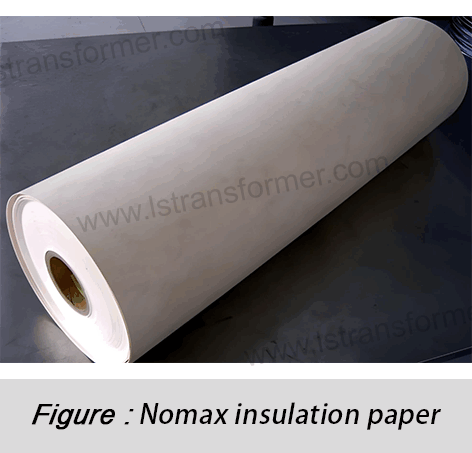
Modern transformer insulation systems have evolved from traditional oil-paper insulation to multi-component composite systems. The table below compares the performance parameters of major high-temperature insulation materials:
| Material Type | Temperature Rating (°C) | Dielectric Strength (kV/mm) | Thermal Conductivity (W/m·K) | Typical Applications |
| Nomex® paper | 220 | 25–35 | 0.12–0.15 | Dry-type transformer winding insulation |
| Polyimide film | 240–260 | 120–150 | 0.10–0.12 | High-frequency transformer interlayer insulation |
| Silicone rubber composite | 180–200 | 15–25 | 0.20–0.25 | Bushings and external insulation |
| Epoxy-mica system | 155–180 | 30–50 | 0.15–0.18 | Main insulation for large power transformers |
2.2 Techno-Economic Analysis of Material Selection
When selecting heat-resistant insulation materials, the following factors must be considered:
(1) Temperature Index (TI):
Per IEC 60216, the highest temperature at which a material retains 50% of its original performance over 20,000 hours.
(2) Coefficient of Thermal Expansion (CTE):
Must match copper/aluminum conductors to avoid mechanical stress from thermal cycling.
(3) Dielectric Loss Factor (tanδ):
Affects operational efficiency; should be kept below 0.5% (IEC 60894).
For example, DuPont’s Nomex® insulation system, made from aramid fibers, maintains over 90% of its mechanical strength at 220°C. Field tests show that transformers using such materials can reduce hotspot temperature rise by 15–20K in 40°C environments compared to traditional materials.
The cost-effectiveness of material upgrades can be evaluated using the following formula:
LCC = CI + ∑(E_loss × t × p) + ∑(MTTR × c_f)
Where:
LCC: Total lifecycle cost CI: Initial investment cost
E_loss: Energy loss t: Operating time
p: Electricity price MTTR: Mean time to repair
c_f: Failure cost
Case studies indicate that while high-temperature insulation materials increase initial costs by 30–50%, they can save 15–25% in total lifecycle costs.
3. Optimized Design and Synergistic Effects of Forced Air Cooling Systems
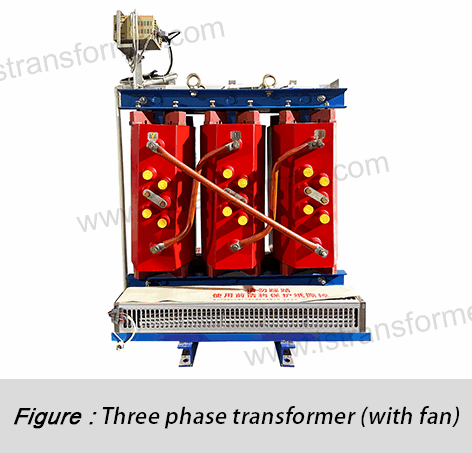
The synergistic design of forced air cooling systems and heat-resistant insulation materials is the most effective solution for controlling transformer temperature rise in high-temperature environments. This integrated system operates through three key mechanisms:
3.1 Heat Transfer Path Optimization
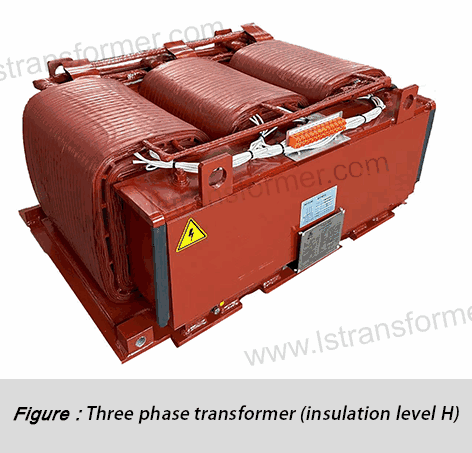
Forced air cooling enhances convective heat transfer, described by the modified Newton’s Law of Cooling:
Q = (h_m + h_f) × A × (T_s − T_a)
Where:
h_m: Material’s inherent heat transfer coefficient
h_f: Additional heat transfer coefficient from forced cooling
A: Effective cooling area
T_s: Surface temperature
T_a: Ambient temperature
Heat-resistant materials increase h_m by improving thermal conductivity (k-value), while forced cooling boosts h_f via higher airflow. Their synergy significantly improves total heat transfer efficiency without enlarging the equipment.
3.2 Temperature Gradient Management
The core of synergistic design lies in optimizing internal temperature distribution. Heat-resistant materials ensure insulation reliability in high-temperature zones (e.g., windings), while forced cooling targets these hotspots. This strategy is modeled as:
R_total = R_cond_material + R_conv_cooling = (L / kA) + (1 / hA)
Minimizing R_total by selecting high-k materials and optimizing cooling design can reduce hotspot temperatures by 25–35K and increase load capacity by 15–25%.
3.3 Enhanced System Reliability
The synergy also improves reliability. If forced cooling fails temporarily, heat-resistant materials provide a safety buffer. Conversely, sustained cooling delays insulation aging, extending transformer lifespan.
| Parameter | Traditional Design | Synergistic Design | Improvement |
| Hotspot temperature rise (K) | 75–85 | 45–55 | 35–40% reduction |
| Load capacity (%) | 100 | 115–125 | 15–25% increase |
| Lifespan (years) | 20–25 | 30–40 | 50–60% extension |
| Energy efficiency (%) | 97.5–98.0 | 98.2–98.7 | 0.5–0.7 percentage points |
In Summary
Controlling transformer temperature rise in high-temperature environments requires a systemic approach. The synergistic design of heat-resistant materials and intelligent cooling systems not only addresses current challenges but also prepares for harsher future conditions. With advancements like nano-composite insulation and phase-change cooling, transformer performance in high temperatures will further improve, ensuring global energy infrastructure reliability.
For specific projects, consult professional manufacturers to tailor solutions based on climate, load characteristics, and cost requirements. Continuous monitoring and preventive maintenance are equally critical for long-term reliability.
Contacto
LuShan, est. En 1975, es un Chino fabricante profesional que se especializa en los transformadores de potencia y reactores de más de 50 años. Los productos principales son transformador monofásico, trifásico de transformadores de aislamiento, transformador eléctrico, transformador de distribución, el paso hacia abajo y paso transformador de baja tensión del transformador, transformador de alto voltaje, transformador de control, transformador toroidal, R-transformador con núcleo; DC inductores, CA reactores, filtrado de reactor de línea y de carga del reactor, estrangulaciones, el filtrado de los reactores y de los intermedios, de alta frecuencia de los productos.
Nuestros transformadores de potencia y reactores son ampliamente utilizados en las 10 áreas de aplicación: rapid transit, maquinaria de construcción, energía renovable, de fabricación inteligentes, equipos médicos, la mina de carbón de la explosión de la prevención, el sistema de excitación, de vacío, de sinterización(horno), aire acondicionado central.
Saber más acerca de transformadores de potencia y reactores: www.lstransformer.com.
Si desea obtener soluciones personalizadas para transformadores o reactores, póngase en contacto con nosotros.
WhatsApp:+86 13787095096
Correo electrónico: marketing@hnlsdz.com