





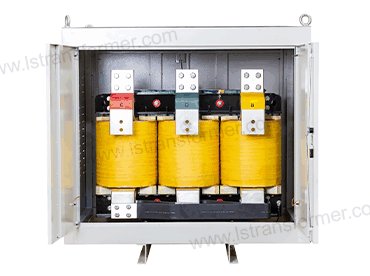
Evolution of Transformer Winding Materials —Balancing Cost and Performance: From Electrolytic Copper to Copper-Clad Aluminum

La maison > FAQ > Page 34
FAQ

Evolution of Transformer Winding Materials —Balancing Cost and Performance: From Electrolytic Copper to Copper-Clad Aluminum

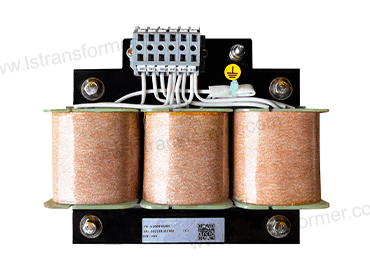
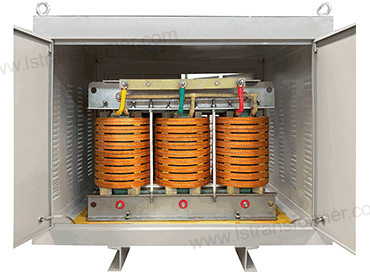
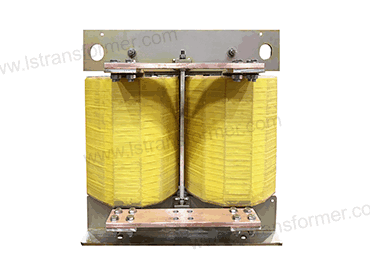
Evolution of Transformer Winding Materials —Balancing Cost and Performance: From Electrolytic Copper to Copper-Clad Aluminum According to data from the International Copper Association (ICA), winding materials account for 35%-50% of a transformer’s total cost. Over the past 30 years, copper prices have surged by 380%, driving global manufacturers to explore low-cost alternatives. From pure electrolytic
FAQ

The Evolution of Transformer Core Materials: From Silicon Steel to Amorphous Alloys

​The Evolution of Transformer Core Materials: From Silicon Steel to Amorphous Alloys Driven by the global energy transition and carbon neutrality goals, the innovation of transformer core materials has become central to improving energy efficiency. This article explores the evolution of silicon steel, cold-rolled grain-oriented silicon steel, and amorphous alloys, covering their historical background, performance

FAQ

What Are Current Limiting Reactors? —The Secret Weapon for Power System Short Circuit Protection

What Are Current Limiting Reactors? —The Secret Weapon for Power System Short Circuit Protection According to the International Council on Large Electric Systems (CIGRE), short circuits are among the deadliest threats to power systems. Current limiting reactors suppress 60%-80% of fault currents, preventing over $8 billion in global equipment losses annually. This article, based on

FAQ

How to Reduce Leakage Flux in Transformers?

How to Reduce Leakage Flux in Transformers? — Applications of Silicon Steel Lamination, Copper Shielding Rings, and Magnetic Gap Fillers In power transmission and electronic devices, transformers play a critical role. However, leakage flux generated during transformer operation not only reduces efficiency but also causes electromagnetic interference (EMI), localized overheating, and noise. According to statistics

FAQ

Comment Contrôler Transformateur de Montée de la Température dans des Environnements à Haute Température?

How to Control Transformer Temperature Rise in High-Temperature Environments? —Synergistic Design of Heat-Resistant Insulation Materials and Forced Air Cooling Against the backdrop of global warming and increasing industrial demand, the stable operation of transformers in high-temperature environments has become a major challenge for the power industry. This article delves into a comprehensive solution for controlling

FAQ

Can Lamination Process Optimization Reduce Leakage Flux?

Can Lamination Process Optimization Reduce Leakage Flux? —In-Depth Analysis of Winding Transposition and Core Step-Lap Joint Technology In the global wave of pursuing carbon neutrality, the energy consumption of power equipment has become a growing focus. According to data from the International Energy Agency (IEA), transmission and distribution losses account for approximately 8%-15% of global

FAQ

How Ambient Temperature Affects Temperature Rise? —Temperature Rise Correction Factors for High Altitude and Humid Regions

How Ambient Temperature Affects Temperature Rise? —Temperature Rise Correction Factors for High Altitude and Humid Regions Transformers and reactors, as core equipment in power systems, directly impact the stability of the entire grid. With the global deployment of power equipment, environmental factors affecting temperature rise have become a key focus of International Electrotechnical Commission (IEC)

FAQ

Reactor Vibration Causing Structural Cracks? —Dual Reinforcement with Seismic Brackets and Epoxy Resin Encapsulation

Reactor Vibration Causing Structural Cracks? —Dual Reinforcement with Seismic Brackets and Epoxy Resin Encapsulation In power systems, industrial frequency converters, and renewable energy plants, “structural cracks caused by reactor vibration” have become a critical challenge for engineers worldwide. According to IEEE 693-2018 research, vibration acceleration during reactor operation can exceed 2.5g, leading to a 60%-80%

FAQ

How to Improve Harmonic Filtering Efficiency of Reactors? —Exploring Impedance Frequency Characteristics and Topology Optimization

How to Improve Harmonic Filtering Efficiency of Reactors? —Exploring Impedance Frequency Characteristics and Topology Optimization According to the International Energy Agency (IEA), inadequate harmonic filtering efficiency in reactors results in annual global energy losses of $32 billion, particularly in 3rd and 5th harmonic frequency bands (150–300 Hz). Traditional reactors struggle with impedance mismatch and thermal

FAQ

Why Do Transformer Standby Costs Surpass Millions? ​—Transformer Energy Efficiency Optimization & Smart Power-Saving Technologies Explained

Why Do Transformer Standby Costs Surpass Millions? —Transformer Energy Efficiency Optimization & Smart Power-Saving Technologies Explained As global energy costs rise and carbon neutrality goals advance, transformer no-load loss has become a significant “hidden energy drain” in industrial sectors. According to the International Energy Agency (IEA), approximately 35% of industrial transformers worldwide exceed no-load loss

WhatsApp QR WeChat QR IVL 0.013mH-610A
Faire défiler vers le Haut