





Why Do Reactors Generate Excessive Vibration and Noise After Installation? — Core Causes and Proven Solutions

ホーム > 投稿者: 369703005 > ページ 30
FAQ

Why Do Reactors Generate Excessive Vibration and Noise After Installation? — Core Causes and Proven Solutions

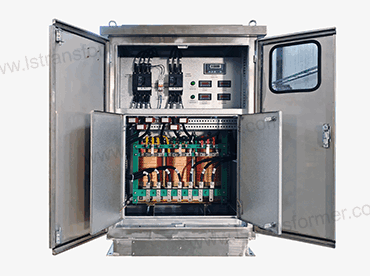
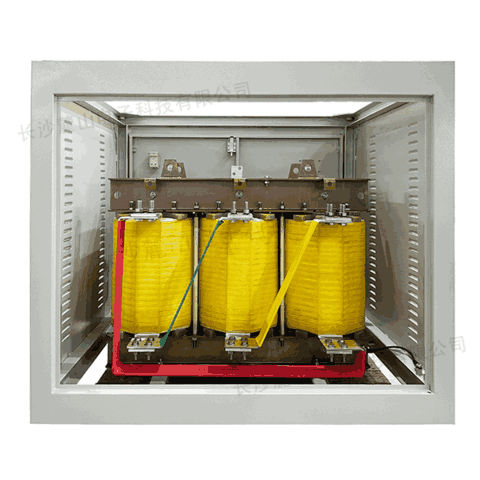
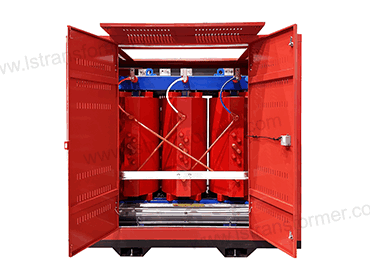
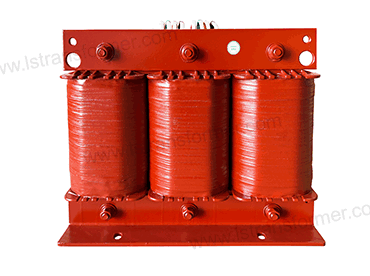
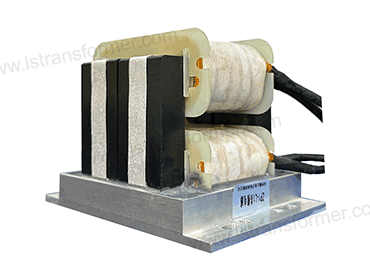
Why Do Reactors Generate Excessive Vibration and Noise After Installation? — Core Causes and Proven Solutions With increasing demands for energy efficiency and reliability in industrial power systems, reactor vibration and noise have become critical challenges affecting equipment lifespan and user experience. According to the International Energy Agency (IEA), 25% of reactor failures are directly linked to excessive vibration and noise, resulting in annual economic losses exceeding $8 billion. Based on standards like IEC 60076-27 (reactor vibration limits) and IEEE 519-2022 (harmonic control), the root causes lie in electromagnetic forces and mechanical resonance. This article analyzes global case studies and technical standards to explain these causes and provide systematic solutions, enabling […]
FAQ

Why Does Electromagnetic Interference (EMI) Challenge Precision Equipment? —How Custom Reactors Provide Precision Solutions

Why Does Electromagnetic Interference (EMI) Challenge Precision Equipment? —How Custom Reactors Provide Precision Solutions As industrial automation and precision equipment applications grow, electromagnetic interference (EMI) has become a critical challenge across manufacturing, healthcare, and scientific research.According to the International Electrotechnical Commission (IEC), 45% of precision equipment failures are directly linked to EMI, causing issues like medical imaging misdiagnoses, semiconductor yield losses, and lab data corruption, with annual global losses exceeding $20 billion. This article explores EMI root causes aligned with IEC 61000 (EMC Standards) and IEEE 519-2022 (Harmonic Control), and introduces custom reactors as a systematic solution to achieve 99% EMI suppression, ensuring equipment reliability and data accuracy. Content 1.

FAQ

How to Handle Transformer Short-Circuit Emergencies? —Risk Warning and Intelligent Solutions Unveiled

How to Handle Transformer Short-Circuit Emergencies? —Risk Warning and Intelligent Solutions Unveiled With the increasing complexity of global industrial power systems, transformer short-circuit failures have become a critical threat to equipment safety and operational continuity. According to IEA data, annual direct economic losses from transformer short circuits exceed $12 billion, with 35% of accidents caused by insufficient risk warnings and emergency measures . Based on IEC 60076-5 (Short-Circuit Withstand Standard) and IEEE C37.91 (Protection Relay Guidelines), short-circuit currents can reach 20–30 times the rated value, causing instantaneous temperature surges exceeding 1000°C—leading to winding meltdowns, insulating oil explosions, and grid cascading failures. This article integrates global case studies and technical standards

FAQ

How to Balance Budget and Quality While Boosting Energy Efficiency?— Industrial Transformer Price Traps

How to Balance Budget and Quality While Boosting Energy Efficiency? — Industrial Transformer Price Traps As global energy costs rise and carbon neutrality goals advance, purchasing decisions for industrial transformers face critical challenges. Opting for low-priced units may seem cost-effective initially, but hidden risks like poor energy efficiency, shorter lifespans, and soaring maintenance costs often lead to higher total expenses. According to the International Energy Agency (IEA), 35% of industrial users worldwide fall into a “high maintenance-short lifespan-repeat purchase” cycle due to cheap transformers, incurring over $12 billion in annual extra costs. This article decodes the root causes of these price traps using IEC 60076 (energy efficiency standards) and IEEE

FAQ

Dry-Type vs Oil-Immersed Transformers — Which Has Lower Maintenance Costs?

Dry-Type vs Oil-Immersed Transformers — Which Has Lower Maintenance Costs? In the global shift toward energy transition and carbon neutrality, choosing between dry-type transformers and oil-immersed transformers has become a critical decision for industrial users. Compliance with international standards like IEC 60076-20 and IEEE C57.12.00 mandates strict efficiency and temperature limits (e.g., winding temperature ≤95°C). The EU Ecodesign Directive 2021 further requires a 30% reduction in no-load losses for new transformers by 2025. Dry-type transformers, favored for their eco-friendliness, already dominate 65% of Europe’s data center market. This article analyzes maintenance cost differences between these transformers, offering actionable insights for industrial decision-makers. Content 1.Dry-Type Transformer Maintenance Costs & Cost-Saving Strategies 1.1 Key

FAQ

Why Does Nighttime Transformer Noise Always Disturb Residents? —45dB(A) Solutions & Global Standards Explained

Why Does Nighttime Transformer Noise Always Disturb Residents? —45dB(A) Solutions & Global Standards Explained As urbanization accelerates globally, the demand for quieter residential environments has intensified. According to the International Energy Agency (IEA), approximately 35% of residential areas worldwide face transformer noise exceeding acceptable levels, with nighttime noise pollution being particularly severe. The EU’s revised Environmental Noise Directive (END 2002/49/EC) in 2023 tightened nighttime noise limits to 45dB(A) in residential zones and mandated compliance with ISO 3744 acoustic testing standards. Integrating IEC 60076-27 (transformer noise limits), IEEE C57.12.90 (vibration control), and global case studies, this article explores the root causes of transformer noise and provides systematic solutions to achieve 45dB(A)

FAQ

Why Are New Energy Power Station Transformers Prone to Frequent Failures? — Environmental Adaptation Solutions Revealed

Why Are New Energy Power Station Transformers Prone to Frequent Failures? —Environmental Adaptation Solutions Revealed With global renewable energy capacity exceeding 3.5 TW (2023 data), transformer failure rates in solar farms and wind farms continue to rise. According to IRENA, approximately 28% of new energy stations face annual downtime exceeding 120 hours due to transformer issues, resulting in losses of $15–30k/MW. Extreme environmental conditions and design flaws—highlighted by IEC 60076-27 (environmental adaptability) and IEEE C57.21 (thermal design)—are key culprits. This article analyzes failure mechanisms and provides retrofit solutions to extend equipment lifespan by 50% and reduce maintenance costs by 30–40%. Content 1.Top 3 Environmental Threats to New Energy Station Transformers

FAQ

Why Is Harmonic Governance Ineffective? — Key Solutions for Reactor and Capacitor Mismatch

Why Is Harmonic Governance Ineffective? —Key Solutions for Reactor and Capacitor Mismatch As industrial power systems grow more complex, harmonic pollution has become a critical issue leading to equipment failures and energy inefficiency. According to the International Energy Agency (IEA), approximately 28% of global industrial power systems suffer energy efficiency losses exceeding 15% due to improper harmonic governance, resulting in annual economic losses of $12 billion. Standards like IEC 61000-3-6 (harmonic current emission limits) and IEEE 519-2022 (harmonic control guidelines) identify mismatched reactors and capacitors as a primary cause of harmonic governance failure. This article analyzes global case studies and technical standards to debunk common myths and provide systematic solutions,

FAQ

How to Maintain High Performance in Compact Reactor Design? — Key Innovations for High-Frequency Inductors

How to Maintain High Performance in Compact Reactor Design? —Key Innovations for High-Frequency Inductors The demand for miniaturized reactors (or compact reactors) is surging at an annual rate of 15%, driven by rapid growth in renewable energy, 5G telecommunications, and data centers (MarketsandMarkets, 2023).However, shrinking reactor size by 40%-60% poses significant challenges in balancing efficiency, thermal management, and reliability. According to IEC 62025 (high-frequency inductor standards) and IEEE 1812 (electromagnetic component design guidelines), optimizing performance requires breakthroughs in three key areas: advanced materials, thermal management, and structural design. This article explores cutting-edge solutions and global case studies to help manufacturers achieve 20% higher efficiency and 15°C lower temperature rise in

FAQ

Why Does Your Factory’s Electricity Bill Remain Sky-High? —Hidden Costs of Transformer Power Loss Explained

Why Does Your Factory’s Electricity Bill Remain Sky-High? —Hidden Costs of Transformer Power Loss Explained Industrial electricity bills often hide a critical culprit: transformer power loss, which accounts for 20%-30% of energy costs. According to the International Energy Agency (IEA), global industrial transformers waste over 200 billion kWh annually—equivalent to Germany’s total yearly consumption. Yet, many factory managers overlook the root causes and solutions. This article reveals how to tackle transformer inefficiencies and slash your energy expenses. Content 1. No-Load Losses: The Silent Energy Drain No-load losses occur when transformers run idle, primarily due to core losses in the iron core. These include: (1) Hysteresis Loss: Caused by magnetic reversal in

WhatsAppにQR WeChat QR sales@hnlsdz.com
スクロールトップ