






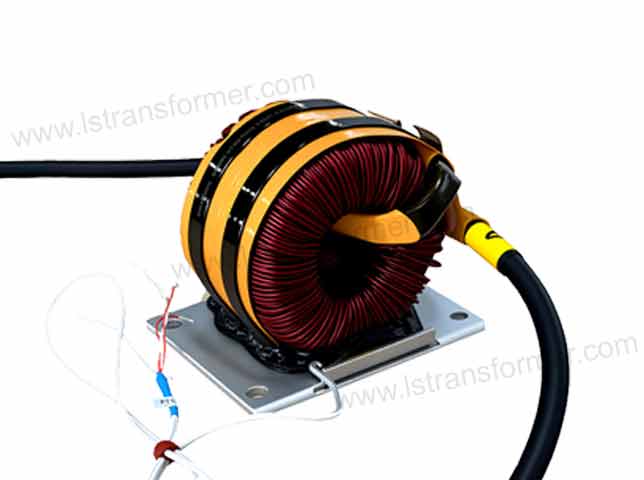
How to Ensure Reactors Operate Normally in Low-Temperature Environments (-40°C)?

ホーム > 投稿者: 369703005 > ページ 43
FAQ

How to Ensure Reactors Operate Normally in Low-Temperature Environments (-40°C)?

With the global development of industrial technology and the increasing demand for electricity under extreme climate conditions, the reliable operation of reactors in low-temperature environments has become a critical issue in the power industry. In regions such as the Arctic, high-altitude areas, or severely cold winter zones, temperatures can drop to -40°C or even lower, posing significant challenges to the material properties, mechanical structure, and electrical characteristics of reactors. International standards organizations such as the International Electrotechnical Commission (IEC) and IEEE have established specific standards for the operation of power equipment in extreme temperature environments, including IEC 60076-11 and IEEE C57.91. These standards provide essential guidance for the design, testing, […]

FAQ

How to Improve the Protection Level of Transformers Through Structural Design?

In the global industrial electrical equipment market, transformers, as the core components of power systems, have seen their protection level become a key factor in product selection by users. With increasingly stringent safety standards from organizations such as the International Electrotechnical Commission (IEC) and the Institute of Electrical and Electronics Engineers (IEEE), optimizing transformer structural design to enhance protection performance has become a major challenge for manufacturers and engineers. This article analyzes four dimensions—material selection, sealing technology, thermal balance, and mechanical reinforcement—in accordance with international standards suchas IEC 60076 and IEEE C57.12.00.It also includes key parameter comparison tables and thermal resistance calculation formulas to provide practical solutions for overseas customers.

FAQ

How to Determine Transformer Insulation Performance Through Temperature Rise Test? – Key Guidelines Explained

In global power grid infrastructure, the stable operation of transformers is fundamental to electrical safety. The Temperature Rise Test serves as a core evaluation method directly impacting transformer insulation system reliability and service life. This article details the principles of the test, key execution points, and how it reveals insights into insulation performance. Content 1. Core Principles and Purpose of the Temperature Rise Test Thermal Degradation of Insulation Materials is one of the primary causes of transformer failure. High temperatures accelerate the chemical decomposition process of insulating materials (such as insulating oil and cellulose solid insulation in oil-paper composite systems), leading to a sharp decline in their electrical and mechanical strength,

FAQ

How to Prevent Interference When Strong Magnetic Fields Exist Around Transformers?

As a core component of power systems, transformers generate strong magnetic fields during operation, which can potentially interfere with nearby electronic equipment, communication systems, and even human health. This article provides a detailed analysis of the principles behind transformer magnetic field interference and offers practical solutions to help effectively reduce or eliminate these interference issues. Content 1. Principles and Effects of Transformer Magnetic Field Interference When a transformer operates, it creates a changing magnetic field in the surrounding space due to the principle of electromagnetic induction. According to Maxwell’s equations, a changing current produces a changing magnetic field, and this changing magnetic field, in turn, induces an electromotive force. This

FAQ

How Do Cooling Methods Affect Transformer Operating Efficiency?

Transformers are essential components in power systems, and their operating efficiency directly impacts energy losses and operational costs across the entire grid. In transformer design and operation, the choice of cooling method is a critical factor—not only does it influence equipment lifespan and reliability, but it also significantly affects operating efficiency. This article explores howdifferent cooling methods such as ONAN, ONAF, and OFAF impact transformer performance, analyzes the underlying thermodynamic principles, and provides data to help electrical engineers and procurement decision-makers make more informed choices. Globally, with rising energy efficiency standards (such as IEC 60076, IEEE C57.12.00, etc.), understanding the relationship between cooling methods and transformer efficiency transformer efficiency has become

FAQ

のの定義は単相トランス?

What is the definition of a single-phase transformer? A single-phase transformer is a transformer in which both the primary winding and the secondary winding are single-phase windings. A unipolar switch power supply refers to an output that is unipolar, meaning it only has positive and negative outputs, as opposed to a bipolar switch power supply, which has three outputs: positive, negative, and ground. Single-phase transformers have a simple structure, small size, and low losses, mainly due to low iron losses. They are suitable for use and promotion in low-voltage distribution networks with low load density. Suzhou City has accumulated the use of more than 1000 units, saving 45GWh, which is

FAQ

How to isolate the metal particles generated by the submerged oil pump?

How to isolate the metal particles generated by the submerged oil pump? There are various types of submerged oil pumps for forced oil cooling in transformers, including axial flow, disc-type, and general submerged oil pumps, but they all have the potential to produce metal particles due to wear. If these metal particles enter the transformer body, the consequences can be severe. The generation of metal particles in the submerged oil pump occurs as follows: during bearing wear, mica-like iron particles are produced from the inner and outer races; friction between the balls and the cage generates needle-like iron particles; friction between the motor rotor and stator produces extremely thin sheet-like

WhatsAppにQR WeChat QR sales@hnlsdz.com
スクロールトップ