





How to Improve Harmonic Filtering Efficiency of Reactors? —Exploring Impedance Frequency Characteristics and Topology Optimization

Home > Author: 369703005 > Page 32
FAQ

How to Improve Harmonic Filtering Efficiency of Reactors? —Exploring Impedance Frequency Characteristics and Topology Optimization

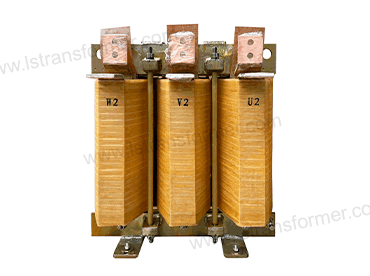
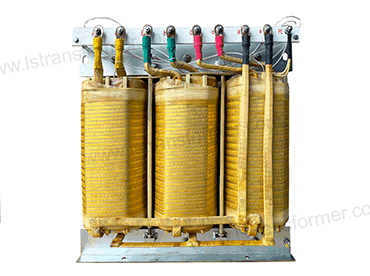
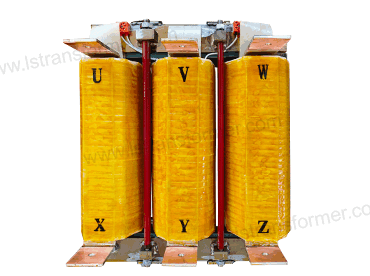
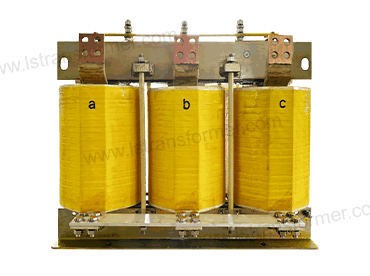
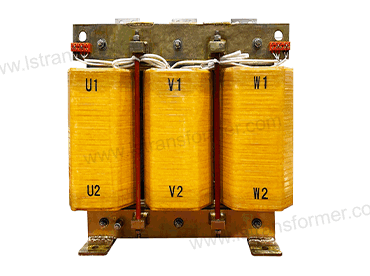
How to Improve Harmonic Filtering Efficiency of Reactors? —Exploring Impedance Frequency Characteristics and Topology Optimization According to the International Energy Agency (IEA), inadequate harmonic filtering efficiency in reactors results in annual global energy losses of $32 billion, particularly in 3rd and 5th harmonic frequency bands (150–300 Hz). Traditional reactors struggle with impedance mismatch and thermal […]
FAQ

Why Do Transformer Standby Costs Surpass Millions? ​—Transformer Energy Efficiency Optimization & Smart Power-Saving Technologies Explained

Why Do Transformer Standby Costs Surpass Millions? —Transformer Energy Efficiency Optimization & Smart Power-Saving Technologies Explained As global energy costs rise and carbon neutrality goals advance, transformer no-load loss has become a significant “hidden energy drain” in industrial sectors. According to the International Energy Agency (IEA), approximately 35% of industrial transformers worldwide exceed no-load loss

FAQ

Why Does Solar Power Plant Output Drop Suddenly? —Core Causes and Smart Solutions for Reactor Failures

Why Does Solar Power Plant Output Drop Suddenly? —Core Causes and Smart Solutions for Reactor Failures As global photovoltaic (PV) capacity exceeds 1 terawatt (TW), solar plant operators face growing operational challenges. According to the International Energy Agency (IEA), 23% of solar power generation losses are directly linked to reactor failures, causing annual economic losses

FAQ

Insufficient Reactor Reactive Power Compensation? —Dynamic Regulation Algorithms & Capacity Expansion Guide

Insufficient Reactor Reactive Power Compensation? —Dynamic Regulation Algorithms & Capacity Expansion Guide   1. Three Root Causes of Reactive Power Deficiency 1.1 Load Fluctuations & Delayed Response Modern grids face wind/solar power fluctuations up to ±30%/minute. Traditional reactors (TCR/MCR) respond in seconds to minutes, causing power factor drops below 0.8 when load changes outpace device

FAQ

How to prevent Transformer Sudden Short-Circuit Failure? —Analyzing Short-Circuit Resistance Verification and Structural Reinforcement Solutions

How to prevent Transformer Sudden Short-Circuit Failure? —Analyzing Short-Circuit Resistance Verification and Structural Reinforcement Solutions In power grid systems and industrial distribution, “transformer sudden short-circuit leading to winding deformation and insulation breakdown” has become a global challenge for electrical equipment reliability. According toIEEE C57.12.00 statistics, short-circuit current impacts can subject windings to electromagnetic forces exceeding 100

FAQ

Why Do Reactor Core Losses Exceed Standards? —Complete Guide to Low-Loss Nanocrystalline Alloy Materials

Why Do Reactor Core Losses Exceed Standards? —Complete Guide to Low-Loss Nanocrystalline Alloy Materials According to the International Energy Agency (IEA), global power systems lose 21 billion kWh annually due to reactor core overheating—equivalent to the yearly electricity consumption of 24 million households. In the era of high-frequency, high-power electronics, traditional magnetic core materials have

FAQ

How to Choose Reactor Core Materials? — Comprehensive Guide to Silicon Steel, Ferrite, and Amorphous Alloys

How to Choose Reactor Core Materials? — Comprehensive Guide to Silicon Steel, Ferrite, and Amorphous Alloys In power systems, new energy inverters, and industrial frequency conversion equipment, “reactor core material selection” is a critical decision affecting efficiency, size, and cost. According toIEEE 389 standards, core materials directly determine 40%-60% of reactor losses. This article, based onIEC

FAQ

What to Do When Reactor Core Air Gap Is Too Large? — Precision Calculation Tools and Assembly Accuracy Control

What to Do When Reactor Core Air Gap Is Too Large? — Precision Calculation Tools and Assembly Accuracy Control The International Energy Agency (IEA) reports that approximately 23% of global reactor failures stem from excessive air gap errors in cores, leading to inductance deviations exceeding ±5% (IEC 60289-2016 limits: ±3%). Air gap accuracy directly determines reactor

FAQ

Why Does Transformer Noise Persist? —From Noise Source Identification to Targeted Solutions

Why Does Transformer Noise Persist? —From Noise Source Identification to Targeted Solutions According to the latest CIGRE survey, 29% of global operational transformers exhibit audible abnormal noise, with 18% of cases leading to equipment damage. Abnormal noise is not only an early sign of performance degradation but also a potential risk to grid safety. This guide integrates IEC 60076

FAQ

Evolution of Transformer Winding Materials —Balancing Cost and Performance: From Electrolytic Copper to Copper-Clad Aluminum

Evolution of Transformer Winding Materials —Balancing Cost and Performance: From Electrolytic Copper to Copper-Clad Aluminum According to data from the International Copper Association (ICA), winding materials account for 35%-50% of a transformer’s total cost. Over the past 30 years, copper prices have surged by 380%, driving global manufacturers to explore low-cost alternatives. From pure electrolytic

WhatsApp QR WeChat QR sales@hnlsdz.com
Scroll to Top