






What to Do When Reactor Core Air Gap Is Too Large? — Precision Calculation Tools and Assembly Accuracy Control
What to Do When Reactor Core Air Gap Is Too Large?
— Precision Calculation Tools and Assembly Accuracy Control
The International Energy Agency (IEA) reports that approximately 23% of global reactor failures stem from excessive air gap errors in cores, leading to inductance deviations exceeding ±5% (IEC 60289-2016 limits: ±3%). Air gap accuracy directly determines reactor efficiency and lifespan, yet traditional manual assembly methods have error rates as high as 12%-18%. This article analyzes the ripple effects of oversized air gaps based onIEEE C57.21 andIEC 62358 standards, offering a full-process solution from calculation tools to smart assembly.
Contenido
1. Three Major Risks of Excessive Air Gaps
1.1 Loss of Inductance Control: Deviation Chain from Design to Testing
The mathematical relationship between air gap length (g) and inductance (L) is:

Variable Definitions:
N: Winding turns
μ0: Vacuum permeability  ( H/m)
Ae: Core effective cross-sectional area (m2)
g: Air gap length (m)
A ±0.1mm air gap error can cause ±8% inductance deviation, leading to:
(1) Harmonic Amplification:
Inductance mismatch amplifies 3rd harmonic currents to 1.5x design values (IEEE 519 limits: 4%). For example, a 0.15mm gap error in a PV inverter raised 3rd harmonic currents from 5% to 7.5%, triggering shutdowns.
(2) Overheating:
±1% inductance deviation increases copper loss by 2.3% (IEC 60076-6 model), raising temperatures from 65°C to 78°C.

1.2 Noise and Vibration Surge
Uneven air gaps cause magnetostrictive force fluctuations. When g deviates:
(1) Vibration Acceleration:Spikes from 2m/s² to 8m/s² (ISO 10816-3 limit: 4.5m/s²).
(2) Noise Levels:100Hz base noise rises from 65dB(A) to 78dB(A), with 400-600Hz harmonics.
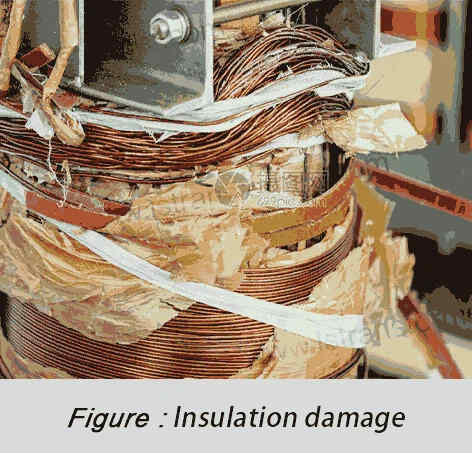
1.3 Local Overheating and Insulation Degradation
Oversized air gaps create magnetic flux hotspots:
(1) Temperature Gradient:±0.2mm error causes a 25°C core (IEC 60076-14 limit: <15°C).
(2) Insulation Lifespan: Per the Arrhenius model, every 10°C over limit halves insulation life. A wind farm reactor with a 0.18mm error saw lifespan drop from 15 to 7 years.
2. Air Gap Calculation Tools: Bridging Theory and Practice
Calculation tools act as a “digital bridge” between design and manufacturing. High-precision simulations and algorithms predict deviations early, reducing errors at the design stage.
2.1 Magnetic Circuit Simulation Software Comparison
| Tool | Method | Error Rate | Certification |
| ANSYS Maxwell | 3D Finite Element | ±0.8% | IEEE 1597.1-2017 |
| COMSOL | Multiphysics Coupling | ±1.2% | IEC 62361-2018 |
| Empirical Formula | Single-Circuit Model | ±5% | None |
Process:
(1) Import core CAD models and B-H curves.
(2) Set air gap range (±0.05mm increments).
(3) Generate inductance-gap curves and field maps.
2.2 Smart Calculator:
GapCalc Pro Developed by Germany’s VAC—
(1) Input: Target inductance, core size, winding specs.
(2) Output:Optimal air gap (±0.02mm accuracy), tolerance band (±0.03mm).
Formula:

Variable Definitions:
μr: Core material permeability (e.g., silicon steel ).
).
lm: Magnetic path length (mm).
3.Assembly Precision Control: Eliminating Millimeter Errors
3.1 Laser-Guided Micro-Adjustment
3.1.1 Principle:
Laser interferometry (0.1µm accuracy) monitors gaps in real-time. For example, a 0.52mm gap (target: 0.50mm) triggers a 0.02mm shim removal via robotic arms, limiting errors to ±0.02mm (1/4 human hair width).
3.1.2 Steps:
(1) Laser scanning (632.8nm wavelength, 100k points/cm²).
(2) Error analysis and shim adjustment (0.01mm steps).
(3) PID-controlled servo motors for dynamic compensation.

3.2 Stress Equalization and Micro-Filling
(1) DIN 2093 Disc Springs: Provide 500-1500N dynamic pressure, compensating 0.05mm thermal expansion (25°C to 85°C). Clamping force fluctuation: <±3%.
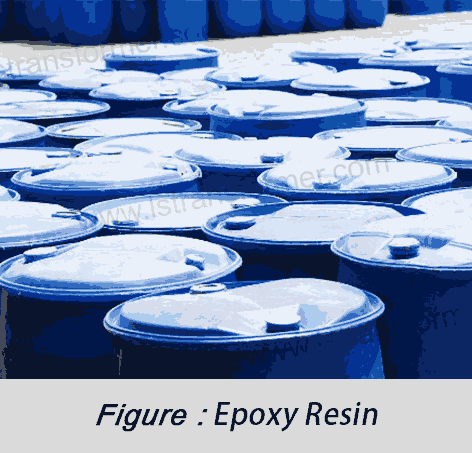
(2) Epoxy Filling:ASTM D1002 epoxy (shear strength >20MPa) fills surface pits (Ra <1.6µm), improving field uniformity by 40% and reducing noise by 6dB(A).
(3) Performance Summary
| Technology | Error Control | Improvement | Normas |
| ANSYS Maxwell | ±0.8% inductance | 40% lower harmonics | IEEE 1597.1 |
| Laser-PID Assembly | ±0.02mm air gap | 12dB(A) noise reduction | ISO 17025 |
| Disc Springs + Epoxy | ±3% clamping force | 18°C lower temperature | DIN 2093/ASTM D1002 |
En Resumen
Conclusion Addressing excessive air gaps is critical for reactor reliability. Combining simulation tools (<±1% error) and laser-guided systems (0.1µm accuracy) limits inductance deviations to ±1%. Key recommendations:
(1) Design: Use IEC 62358-certified tools.
(2) Assembly: Deploy ISO 17025-calibrated laser systems.
(3) Testing: Conduct IEEE C57.16 tests for temperature-gap correlation.
For grid-connected reactors, adopt Class A air gap tolerance with disc spring clamping to extend lifespan beyond 15 years.
Contacto
LuShan, est. En 1975, es un Chino fabricante profesional que se especializa en los transformadores de potencia y reactores de más de 50 años. Los productos principales son transformador monofásico, trifásico de transformadores de aislamiento, transformador eléctrico, transformador de distribución, el paso hacia abajo y paso transformador de baja tensión del transformador, transformador de alto voltaje, transformador de control, transformador toroidal, R-transformador con núcleo; DC inductores, CA reactores, filtrado de reactor de línea y de carga del reactor, estrangulaciones, el filtrado de los reactores y de los intermedios, de alta frecuencia de los productos.
Nuestros transformadores de potencia y reactores son ampliamente utilizados en las 10 áreas de aplicación: rapid transit, maquinaria de construcción, energía renovable, de fabricación inteligentes, equipos médicos, la mina de carbón de la explosión de la prevención, el sistema de excitación, de vacío, de sinterización(horno), aire acondicionado central.
Saber más acerca de transformadores de potencia y reactores: www.lstransformer.com.
Si desea obtener soluciones personalizadas para transformadores o reactores, póngase en contacto con nosotros.
WhatsApp:+86 13787095096
Correo electrónico: marketing@hnlsdz.com