






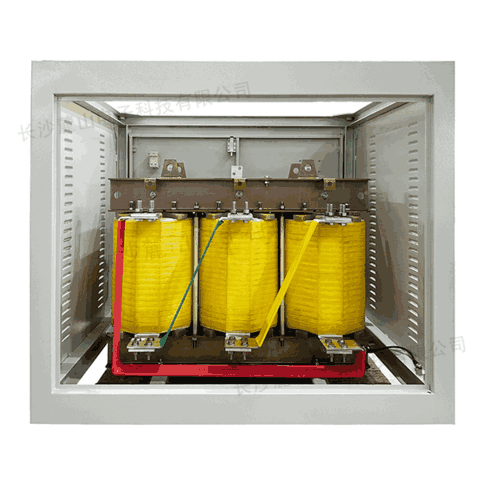
Dry-Type vs Oil-Immersed Transformers — Which Has Lower Maintenance Costs?
Dry-Type vs Oil-Immersed Transformers — Which Has Lower Maintenance Costs? In the global shift toward energy transition and carbon neutrality, choosing between dry-type transformers and oil-immersed transformers has become a critical decision for industrial users. Compliance with international standards like IEC 60076-20 and IEEE C57.12.00 mandates strict efficiency and temperature limits (e.g.,...
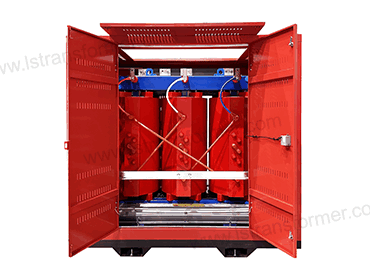
Why Does Nighttime Transformer Noise Always Disturb Residents? —45dB(A) Solutions & Global Standards Explained
Why Does Nighttime Transformer Noise Always Disturb Residents? —45dB(A) Solutions & Global Standards Explained As urbanization accelerates globally, the demand for quieter residential environments has intensified. According to the International Energy Agency (IEA), approximately 35% of residential areas worldwide face transformer noise exceeding acceptable levels, with nighttime noise pollution being...
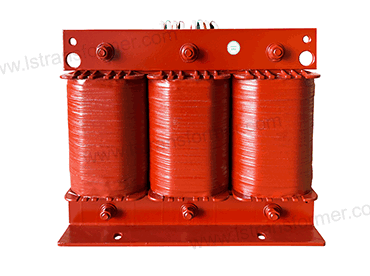
Why Are New Energy Power Station Transformers Prone to Frequent Failures? — Environmental Adaptation Solutions Revealed
Why Are New Energy Power Station Transformers Prone to Frequent Failures? —Environmental Adaptation Solutions Revealed With global renewable energy capacity exceeding 3.5 TW (2023 data), transformer failure rates in solar farms and wind farms continue to rise. According to IRENA, approximately 28% of new energy stations face annual downtime exceeding...
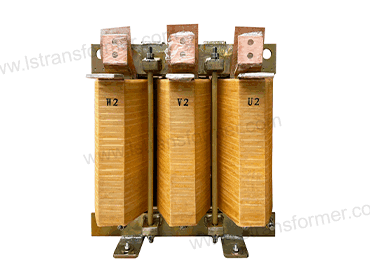
Insufficient Reactor Reactive Power Compensation? —Dynamic Regulation Algorithms & Capacity Expansion Guide
Insufficient Reactor Reactive Power Compensation? —Dynamic Regulation Algorithms & Capacity Expansion Guide 1. Three Root Causes of Reactive Power Deficiency 1.1 Load Fluctuations & Delayed Response Modern grids face wind/solar power fluctuations up to ±30%/minute. Traditional reactors (TCR/MCR) respond in seconds to minutes, causing power factor drops below 0.8...
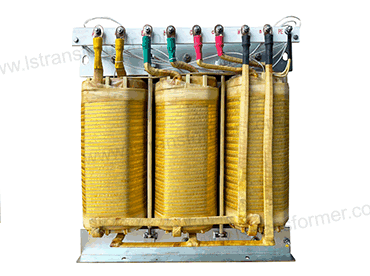
How to prevent Transformer Sudden Short-Circuit Failure? —Analyzing Short-Circuit Resistance Verification and Structural Reinforcement Solutions
How to prevent Transformer Sudden Short-Circuit Failure? —Analyzing Short-Circuit Resistance Verification and Structural Reinforcement Solutions In power grid systems and industrial distribution, "transformer sudden short-circuit leading to winding deformation and insulation breakdown" has become a global challenge for electrical equipment reliability. According toIEEE C57.12.00 statistics, short-circuit current impacts can subject windings...
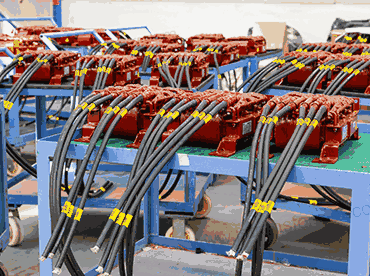
Why Do Reactor Core Losses Exceed Standards? —Complete Guide to Low-Loss Nanocrystalline Alloy Materials
Why Do Reactor Core Losses Exceed Standards? —Complete Guide to Low-Loss Nanocrystalline Alloy Materials According to the International Energy Agency (IEA), global power systems lose 21 billion kWh annually due to reactor core overheating—equivalent to the yearly electricity consumption of 24 million households. In the era of high-frequency, high-power electronics,...
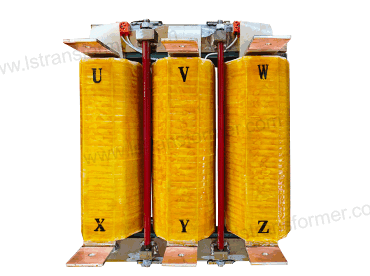
How to Choose Reactor Core Materials? — Comprehensive Guide to Silicon Steel, Ferrite, and Amorphous Alloys
How to Choose Reactor Core Materials? — Comprehensive Guide to Silicon Steel, Ferrite, and Amorphous Alloys In power systems, new energy inverters, and industrial frequency conversion equipment, "reactor core material selection" is a critical decision affecting efficiency, size, and cost. According toIEEE 389 standards, core materials directly determine 40%-60% of reactor...
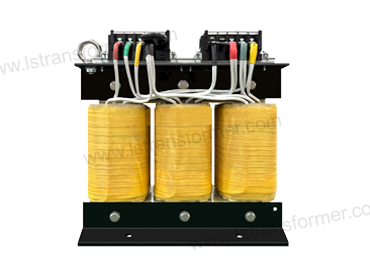
How to Protect Power Equipment During Thunderstorms? —A Collaborative Solution of Lightning Arresters and Transformers
How to Protect Power Equipment During Thunderstorms? —A Collaborative Solution of Lightning Arresters and Transformers Due to global climate change, thunderstorms are becoming increasingly frequent. According to statistics from the World Meteorological Organization (WMO), the global average number of thunderstorm days in 2023 increased by 18% compared to a decade...
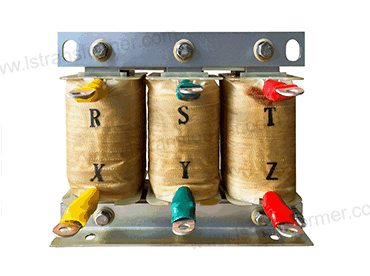
What to Do When Reactor Core Air Gap Is Too Large? — Precision Calculation Tools and Assembly Accuracy Control
What to Do When Reactor Core Air Gap Is Too Large? — Precision Calculation Tools and Assembly Accuracy Control The International Energy Agency (IEA) reports that approximately 23% of global reactor failures stem from excessive air gap errors in cores, leading to inductance deviations exceeding ±5% (IEC 60289-2016 limits: ±3%). Air...
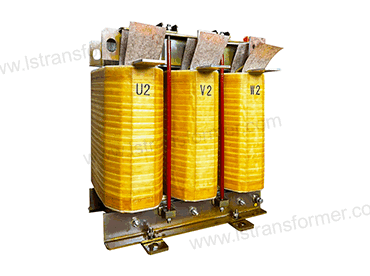
How to Choose a Reactor? —From Theory to Practical Application Matching
How to Choose a Reactor? —From Theory to Practical Application Matching In global industrial and energy systems, reactors are core components for regulating current, suppressing harmonics, and improving power quality. Their selection directly impacts equipment efficiency and system stability. According to Google search data, keywords such as "how to choose...
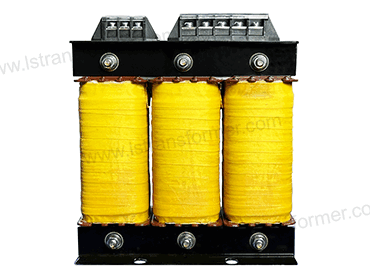
Why Does Transformer Noise Persist? —From Noise Source Identification to Targeted Solutions
Why Does Transformer Noise Persist? —From Noise Source Identification to Targeted Solutions According to the latest CIGRE survey, 29% of global operational transformers exhibit audible abnormal noise, with 18% of cases leading to equipment damage. Abnormal noise is not only an early sign of performance degradation but also a potential risk to grid safety....
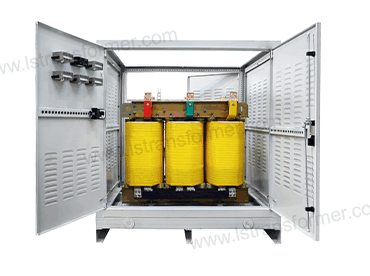
How Does Humid Environment Cause Transformer Insulation Failure? —In-Depth Analysis of IP68 Protection Level Transformer Solutions
How Does Humid Environment Cause Transformer Insulation Failure? —In-Depth Analysis of IP68 Protection Level Transformer Solutions In coastal areas, tropical rainforests, and industrial environments sensitive to humidity, "transformer insulation failure due to humid conditions" has become a core challenge in global power system maintenance. Research shows that environments with relative...

