





その特徴用している巻線変圧器? (その2)

ホーム > 投稿者: 369703005 > ページ 12
FAQ

その特徴用している巻線変圧器? (その2)

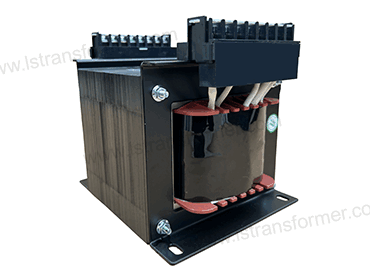
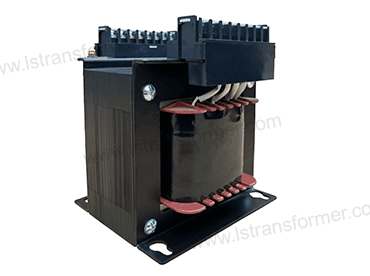
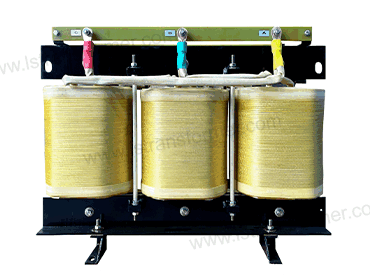
What are the characteristics of using flat winding for transformers? (Part 2) In the previous article, we introduced the advantages of flat winding. However, compared with vertical winding, flat winding also has some disadvantages, which will be explained one by one below. Content 1. Low space utilization The flat winding method occupies a large space in the horizontal direction. For some application scenarios with limited space, it may be restricted. Compared with vertical winding, it is difficult for flat winding to achieve a higher number of winding turns in the same space, which may affect the voltage transformation ability of the transformer. For example, in some compact electronic devices, flat […]
FAQ

What are the characteristics of using vertical winding for transformers? (Part2)

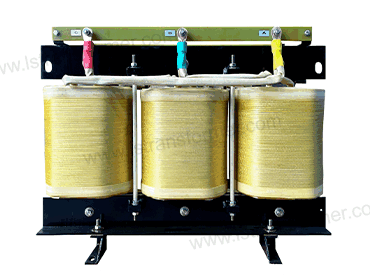
What are the characteristics of using vertical winding for transformers? (Part2) In the manufacturing of transformers, the choice of winding method has an important impact on its performance and quality. As a winding method, vertical winding not only has the advantages mentioned in the previous article, but also has some disadvantages. This article will deeply explore the disadvantages of using vertical winding for transformer winding. Content 1. High winding difficulty Vertical winding requires special winding equipment and processes to ensure the tight arrangement and stability of the coil in the vertical direction. During the winding process, the tension and position of the wire need to be precisely controlled; otherwise, problems

FAQ

What are the characteristics of using vertical winding for transformers? (Part 1)

What are the characteristics of using vertical winding for transformers? (Part 1) The choice of winding method has an important impact on the performance and quality of transformers. As a winding method, vertical winding has unique advantages and disadvantages. This article will deeply explore the advantages of vertical winding. Content 1. High space utilization The vertical winding method winds the coil in the vertical direction, which can better utilize the internal space of the transformer. Especially in some application scenarios with strict limitations on space dimensions, vertical winding can achieve a higher number of winding turns in a limited space to meet specific voltage transformation requirements. For example, in some

FAQ

Understanding the Working Principles of Contact Regulating Transformers

Understanding the Working Principles of Contact Regulating Transformers The working principle of a contact regulating transformer is similar to that of an alternator-regulator system. Essentially, the transformer is designed to control the power output of an AC-DC power supply. The contact regulating transformer is comprised of a contact coil, two arms, and two contact electrodes. The contact coil is connected to the arms, while the contact electrodes are connected to the DC power supply. When the AC current flows through the contact coil, an electromagnetic field is generated which acts on the two arms. The arms then move, connecting the contact electrodes to either the positive or the negative output

FAQ

The Different Types and Technical Aspects of Regulating Transformers

The Different Types and Technical Aspects of Regulating Transformers gulating transformers are usually designed based on a variety of criteria including size, winding type, operating frequency, and capacity ratings. The main technical aspects of a regulating transformer include its inductance, capacity, and voltage ratio characteristics. The inductance of a regulating transformer refers to the amount of inductance or impedance in the transformer’s windings, which can be of different types depending on the application. The capacity rating of a regulating transformer is the maximum amount of current that the transformer is able to deliver at a particular voltage. The capacity of a transformer can be increased or decreased depending on the

FAQ

The Power Supply Radius of Transformers

The Power Supply Radius of Transformers Transformers are important devices that are widely used in electrical power systems to transmit and distribute electrical energy. When selecting the location for a transformer, the power supply radius is an important factor to consider. The power supply radius refers to the distance from the transformer to the power source, which can have a significant impact on the performance and safety of the transformer. The power supply radius of a transformer is influenced by several factors, including the voltage level, the load capacity, and the type of transformer. Generally, transformers with higher voltage levels and larger load capacities require longer power supply radii. For

FAQ

Isolation Transformers with Shielding: Processes, Applications, and Cost Differences

Isolation Transformers with Shielding: Processes, Applications, and Cost Differences Isolation transformers are widely used in electrical systems to provide safety and protect sensitive equipment. These transformers work by isolating the input and output power, creating a separation between the two circuits. However, in some cases, additional protection is required to ensure that the circuits are not affected by external interference. One common solution is to use isolation transformers with shielding. The shielding layer provides an additional barrier between the input and output power, blocking any electromagnetic interference that may be present. This can be particularly useful in applications where high levels of interference are present, such as in medical equipment

FAQ

Connection section of Three-Phase Transformers

Connection section of Three-Phase Transformers Three-phase transformers are widely used in power systems to step up or step down the voltage levels in three-phase circuits. The connection of the three-phase transformer windings determines the output voltage and current characteristics of the transformer. There are several types of connection groups for three-phase transformers, each with different advantages and disadvantages. The three most common connection groups for three-phase transformers are Y-Y, Delta-Delta, and Y-Delta. The Y-Y connection group consists of three windings connected in a Y configuration on both the primary and secondary sides. This connection group provides a neutral point on both the primary and secondary sides, which can be used

FAQ

Why are there so many vent plugs and gas guide pipes on a transformer? Why is oil injected from the bottom of the tank?

Why are there so many vent plugs and gas guide pipes on a transformer? Why is oil injected from the bottom of the tank? Vent plugs are commonly installed on the radiator, lifting platform, oil storage tank, and casing of transformers. This is because if vent plugs are not installed, air bubbles will be trapped at the top when oil is injected from the bottom of the tank, creating dead spots. These bubbles, if left inside the transformer, can easily lead to discharges. If they are trapped in the radiator, it can affect the oil flow and, consequently, the heat dissipation efficiency. Due to the varying installation heights and structures

FAQ

What should be considered when selecting and using bushings?

What should be considered when selecting and using bushings? When selecting and using bushings, certain considerations need to be taken into account. Bushings, as current-carrying components of transformers, directly impact the insulation performance of transformers. Here are the key points to be aware of during selection and usage: (1) Ambient Medium Temperature: For oil-immersed transformers, the temperature of the bushings in the oil is related to the temperature rise of the upper oil layer. In the case of self-cooling and forced-air cooling, the temperature rise of the upper oil layer is 55K, thus allowing a temperature rise of 15K for the lower terminal. In the case of strong oil-air cooling,

WhatsAppにQR WeChat QR sales@hnlsdz.com
スクロールトップ