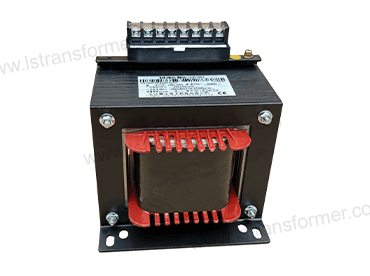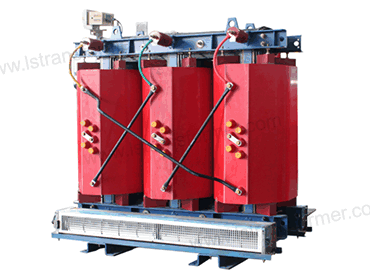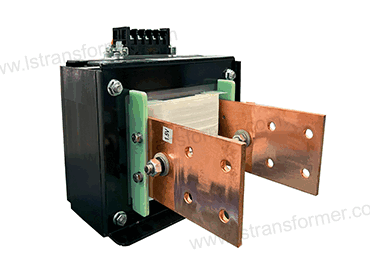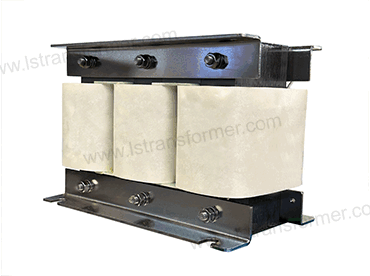






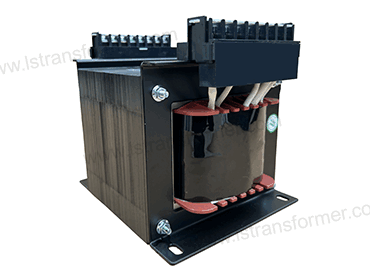
Understanding the Working Principles of Contact Regulating Transformers

ホーム > 投稿者: 369703005 > ページ 13
FAQ

Understanding the Working Principles of Contact Regulating Transformers

Understanding the Working Principles of Contact Regulating Transformers The working principle of a contact regulating transformer is similar to that of an alternator-regulator system. Essentially, the transformer is designed to control the power output of an AC-DC power supply. The contact regulating transformer is comprised of a contact coil, two arms, and two contact electrodes. The contact coil is connected to the arms, while the contact electrodes are connected to the DC power supply. When the AC current flows through the contact coil, an electromagnetic field is generated which acts on the two arms. The arms then move, connecting the contact electrodes to either the positive or the negative output […]
FAQ

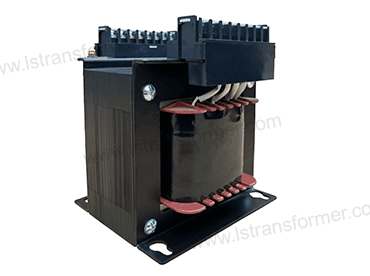
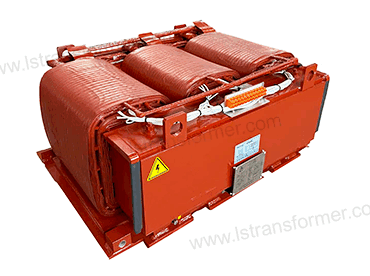
The Different Types and Technical Aspects of Regulating Transformers

The Different Types and Technical Aspects of Regulating Transformers gulating transformers are usually designed based on a variety of criteria including size, winding type, operating frequency, and capacity ratings. The main technical aspects of a regulating transformer include its inductance, capacity, and voltage ratio characteristics. The inductance of a regulating transformer refers to the amount of inductance or impedance in the transformer’s windings, which can be of different types depending on the application. The capacity rating of a regulating transformer is the maximum amount of current that the transformer is able to deliver at a particular voltage. The capacity of a transformer can be increased or decreased depending on the

FAQ

When winding a transformer, what should be considered?

When winding a transformer, what should be considered? (1)Requirements for Winding Direction: During the winding process, special attention must be paid to the winding direction; otherwise, it may result in an incomplete magnetic circuit within the iron core. Winding directions for small to medium-sized three-phase transformers are generally the same. However, for single-phase transformers with two-column windings, especially for single-phase three-split windings with three iron core columns, the winding direction of the middle column is opposite to that of the two side columns. (2)Hazards and Influence of Winding Offset: It is crucial to avoid any offset during the winding process; otherwise, it may lead to the following consequences: after the

FAQ

Regulating transformers are usually classified according to their construction, operating frequency, and manufacturer.

Regulating transformers are usually classified according to their construction, operating frequency, and manufacturer. The most common types of regulating transformers are those which use the alternator-regulator system. This system is employed by almost all modern electrical power systems, and provides the most reliable and stable voltage control. In this system, a device known as an alternator, or alternator regulator, is used to regulate the voltage output of the transformer. This is done by varying the output frequency of the alternator, thus changing the number of cycles in the electrical signal, which in turn affects the voltage output. vAnother type of regulating transformer is the autotransformer-regulator system. In this system, the

FAQ

What is applications of Vacuum Epoxy Resin Cast Transformers in Various Fields?

What is applications of Vacuum Epoxy Resin Cast Transformers in Various Fields? Vacuum epoxy resin cast transformers have gained popularity due to their high efficiency, low noise, and low maintenance requirements. As a result, they are widely used in different fields, including new energy, power systems, rail transportation, military, and more. In the new energy sector, vacuum epoxy resin cast transformers are used in photovoltaic power generation, wind power generation, and other renewable energy systems. The transformers have a higher efficiency, smaller size, and longer lifespan compared to traditional transformers, making them ideal for these applications. In power systems, vacuum epoxy resin cast transformers are used in substations, transmission lines,

FAQ

The Power Supply Radius of Transformers

The Power Supply Radius of Transformers Transformers are important devices that are widely used in electrical power systems to transmit and distribute electrical energy. When selecting the location for a transformer, the power supply radius is an important factor to consider. The power supply radius refers to the distance from the transformer to the power source, which can have a significant impact on the performance and safety of the transformer. The power supply radius of a transformer is influenced by several factors, including the voltage level, the load capacity, and the type of transformer. Generally, transformers with higher voltage levels and larger load capacities require longer power supply radii. For

FAQ

Isolation Transformers with Shielding: Processes, Applications, and Cost Differences

Isolation Transformers with Shielding: Processes, Applications, and Cost Differences Isolation transformers are widely used in electrical systems to provide safety and protect sensitive equipment. These transformers work by isolating the input and output power, creating a separation between the two circuits. However, in some cases, additional protection is required to ensure that the circuits are not affected by external interference. One common solution is to use isolation transformers with shielding. The shielding layer provides an additional barrier between the input and output power, blocking any electromagnetic interference that may be present. This can be particularly useful in applications where high levels of interference are present, such as in medical equipment

FAQ

Connection section of Three-Phase Transformers

Connection section of Three-Phase Transformers Three-phase transformers are widely used in power systems to step up or step down the voltage levels in three-phase circuits. The connection of the three-phase transformer windings determines the output voltage and current characteristics of the transformer. There are several types of connection groups for three-phase transformers, each with different advantages and disadvantages. The three most common connection groups for three-phase transformers are Y-Y, Delta-Delta, and Y-Delta. The Y-Y connection group consists of three windings connected in a Y configuration on both the primary and secondary sides. This connection group provides a neutral point on both the primary and secondary sides, which can be used

FAQ

Why are there so many vent plugs and gas guide pipes on a transformer? Why is oil injected from the bottom of the tank?

Why are there so many vent plugs and gas guide pipes on a transformer? Why is oil injected from the bottom of the tank? Vent plugs are commonly installed on the radiator, lifting platform, oil storage tank, and casing of transformers. This is because if vent plugs are not installed, air bubbles will be trapped at the top when oil is injected from the bottom of the tank, creating dead spots. These bubbles, if left inside the transformer, can easily lead to discharges. If they are trapped in the radiator, it can affect the oil flow and, consequently, the heat dissipation efficiency. Due to the varying installation heights and structures

FAQ

How does the geological environment impact the operation of transformers?

How does the geological environment impact the operation of transformers? The primary consideration is the transformer’s ability to withstand earthquakes. Under normal operating conditions, it is stipulated that the horizontal acceleration of the ground should be less than 0.3g, and the vertical acceleration should be less than 0.15g. When installing transformers in seismically active zones, it can be specified during the ordering process the Richter seismic intensity that the transformer should be able to withstand. Regarding the internal structure of transformers, it has been designed with a focus on secure fixation during transportation and the ability to withstand mechanical stress caused by short-circuit currents. Therefore, the internal components are not

WhatsAppにQR WeChat QR sales@hnlsdz.com
スクロールトップ