





The Use of Voltage Ratio in Single-Phase

ホーム > 投稿者: 369703005 > ページ 15
FAQ

The Use of Voltage Ratio in Single-Phase

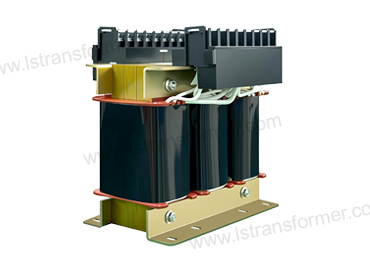
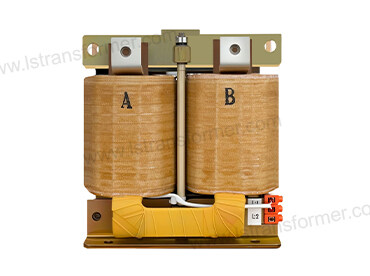
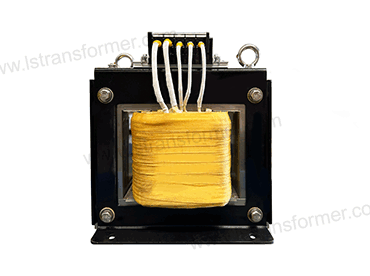
The Use of Voltage Ratio in Single-Phase TransformersSingle-phase transformers are commonly used in many electrical applications to either step up or step down the voltage of the power supply. The voltage ratio of a transformer refers to the ratio of the input voltage to the output voltage. This ratio is determined by the number of turns in the primary winding and the number of turns in the secondary winding. The voltage ratio of a single-phase transformer can be calculated using the following formula: Voltage Ratio = (Number of turns in secondary winding) / (Number of turns in primary winding) For example, if a transformer has 1000 turns in the primary […]
FAQ

The Use and Comparison of Foil Winding and Wire Winding

The Use and Comparison of Foil Winding and Wire Winding Foil winding and wire winding are two commonly used methods in transformer winding. Foil winding is mainly used in transformers above 200A, while wire winding is used in transformers below 200A. The two methods have their advantages and disadvantages. Foil winding is a technique that uses thin layers of copper or aluminum foil as the winding material. Foil winding has a higher fill factor, which means more copper can be placed in the same winding space. This allows for a more compact design and higher power density. However, foil winding is more expensive and requires specialized equipment. Wire winding, on

FAQ

The Difference Between Neutral Wire and Ground Wire

The Difference Between Neutral Wire and Ground Wire In an electrical system, neutral and ground wires play essential roles in ensuring safety and preventing electrical hazards. While the two terms are often used interchangeably, they serve different functions. A neutral wire is a type of wire that carries current back from electrical equipment to the main service panel. It is typically white or gray in color and is grounded at the main service panel. The neutral wire completes the circuit and provides a path for the electrical current to flow back to the source. On the other hand, a ground wire is a type of wire that connects electrical equipment

FAQ

Comparison of Autotransformer and Isolation Transformer in Terms of Capacity Calculation Based on Voltage Ratio

Comparison of Autotransformer and Isolation Transformer in Terms of Capacity Calculation Based on Voltage Ratio The capacity of a transformer is an essential parameter that determines its suitability for various applications. Autotransformers and isolation transformers can be compared based on their capacity calculation using the voltage ratio. (1) In an autotransformer, the voltage ratio is calculated as follows: Voltage Ratio = (Number of Turns in Secondary) / (Number of Turns in Common Winding) (2) In an isolation transformer, the voltage ratio is calculated as follows: Voltage Ratio = (Number of Turns in Secondary) / (Number of Turns in Primary) (3) In an autotransformer, the capacity is calculated using the following

FAQ

The Difference Between Phase Voltage and Line Voltage

The Difference Between Phase Voltage and Line Voltage In an AC electrical system, voltage is an important factor to consider when designing and implementing electrical equipment. Two commonly used voltage measurements in AC systems are phase voltage and line voltage. Although they may seem similar, there are significant differences between them. Phase voltage refers to the voltage measured across a single phase of an AC system. In a three-phase system, there are three phases, each separated by 120 degrees. The phase voltage is measured between a phase and the neutral wire. It is also known as the phase-to-neutral voltage. The voltage measured for each phase will be the same in

FAQ

The first autotransformer of Xuanji High-speed Railway was successfully installed

The first autotransformer of Xuanji High-speed Railway was successfully installed A transformer is an electrical device used to convert the voltage of alternating current from one voltage level to another. It mainly consists of one or more coils (called windings) and a magnetic core. When an input current flows in one winding, it creates a magnetic field in the core. This magnetic field is passed through another winding, which produces an output voltage in that winding. A transformer is a very important device in a power system because it converts electrical energy between different voltage levels for power transmission and distribution.A transformer is an electrical device used to convert the

FAQ

Revealing the Impedance-Frequency Characteristics of Reactors – From Power Frequency to High Frequency

Revealing the Impedance-Frequency Characteristics of Reactors  – From Power Frequency to High Frequency In power systems and electronic devices, reactors play a critical role. But did you know that the same reactor exhibits entirely different impedance characteristics at different frequencies? This frequency dependency directly impacts reactor performance in various applications. This article delves into the impedance variation patterns of reactors from power frequency (50/60Hz) to high frequency (kHz range), uncovering the underlying physics and providing practical selection guidelines. Whether you’re a power engineer, electronic designer, or technician in related fields, understanding these characteristics will help you choose and use reactors more effectively. Content 1. Reactor Impedance Basics: The Inductive-Dominant Nature

FAQ

How to Control Transformer Temperature Rise in High-Temperature Environments? —Synergistic Design of Heat-Resistant Insulation Materials and Forced Air Cooling

How to Control Transformer Temperature Rise in High-Temperature Environments? —Synergistic Design of Heat-Resistant Insulation Materials and Forced Air Cooling Against the backdrop of global warming and increasing industrial demand, the stable operation of transformers in high-temperature environments has become a major challenge for the power industry. This article delves into a comprehensive solution for controlling transformer temperature rise through the synergistic design of heat-resistant insulation materials and forced air cooling systems. It aims to help users understand the essence of this complex technical issue and the strategies to address it. Content 1. Impact of High-Temperature Environments on Transformers and the Importance of Temperature Rise Control Transformers, as core equipment in

FAQ

Comparison of the Four Core Partial Discharge Detection Technologies: In-Depth Analysis of Principles, Advantages, and Applications

Comparison of the Four Core Partial Discharge Detection Technologies: In-Depth Analysis of Principles, Advantages, and Applications In the field of safety maintenance for high-voltage electrical equipment, Partial Discharge Detection (PD Detection) plays a critical role as an early warning system. As global power grids demand higher reliability for key assets such as transformers and reactors, mastering accurate and efficient PD detection technologies has become an industry consensus. This guide provides a detailed analysis of the four mainstream international detection methods: the Pulse Current Method (IEC 60270 Standard), Ultrasonic Method (Acoustic Emission), Ultra-High Frequency (UHF) Method, and Transient Earth Voltage (TEV) Method, helping you develop a scientific equipment health management strategy.

FAQ

What should be taken into consideration during the assembly of transformer pressure plates?

What should be taken into consideration during the assembly of transformer pressure plates? During the assembly of pressure plates, it is essential to simultaneously and evenly fasten the pressure pins on the pressure plates, and it is not allowed to tighten one side first and then the other. For structures with split pressure plates, ensure that the geometric centers of all windings are on the same horizontal line. Of course, the bolts along the box edge, fixing screws for bushings, and other components should also be uniformly fastened one by one. Contact LuShan, est. 1975, is a Chinese professional manufacturer specializing in power transformers and reactors for 50+ years. Leading

WhatsAppにQR WeChat QR sales@hnlsdz.com
スクロールトップ