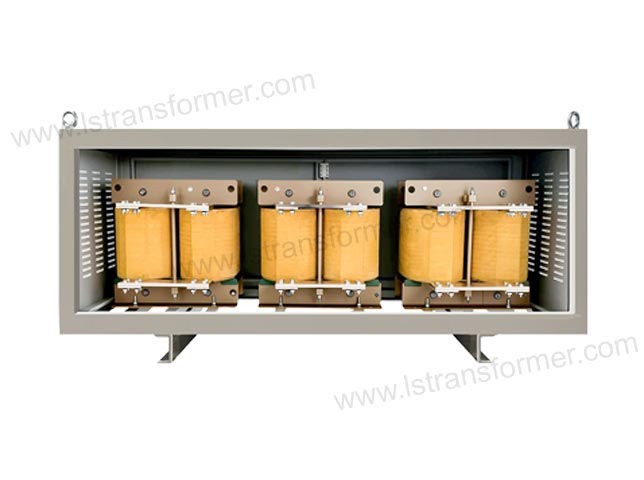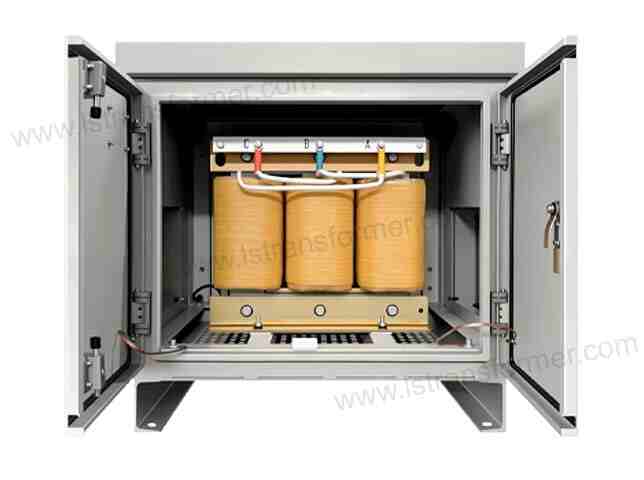






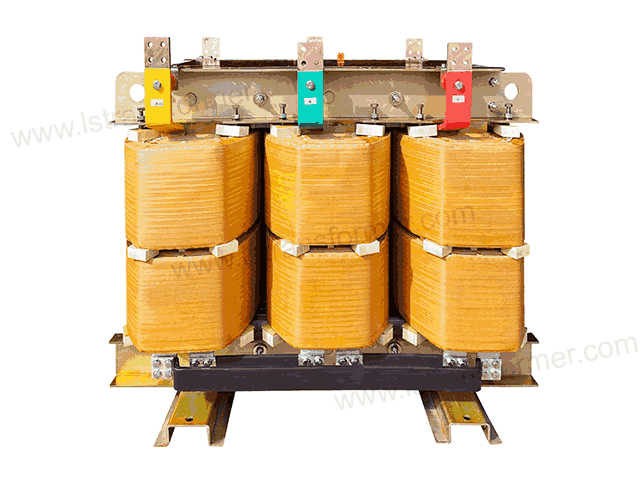
What Is the Typical Protection Rating for Outdoor Reactors?

ホーム > 投稿者: 369703005 > ページ 41
FAQ

What Is the Typical Protection Rating for Outdoor Reactors?

What Is the Typical Protection Rating for Outdoor Reactors? In global power infrastructure, outdoor reactors are key equipment for reactive power compensation and short-circuit current limitation. Their protection rating directly affects long-term reliability and operational safety. This article explores international standards for outdoor reactor protection ratings, selection criteria, and implementation methods to provide comprehensive technical guidance for power engineers, procurement decision-makers, and maintenance personnel. Content 1. Understanding the International Standard for Protection Ratings – IP Code The International Electrotechnical Commission (IEC) established the IP code as a globally recognized standard for evaluating the protective capability of electrical enclosures. This standard is widely adopted by major organizations such as IEEE and […]
FAQ

Five Key Environmental Challenges for Offshore Wind Transformers and Their Solutions

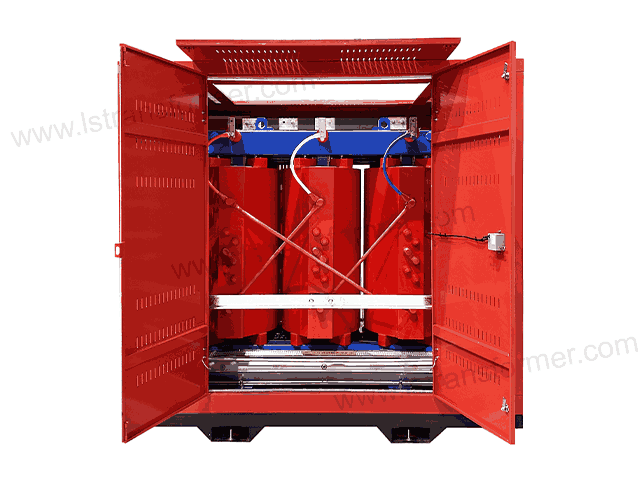
Five Key Environmental Challenges for Offshore Wind Transformers and Their Solutions In the global shift towards renewable energy, offshore wind power has become a strategic focus due to its abundant resources and stable power generation. However, compared to onshore wind turbines, offshore wind transformers operate in truly “extreme” conditions, posing unprecedented challenges to equipment reliability. This article explores the harsh environmental challenges faced by offshore wind transformers and effective strategies to overcome them. Content 1. Salt Mist Corrosion: The Pervasive “Metal Killer” 1.1 Challenge:  High concentrations of salt mist (containing sodium chloride, etc.) carried by sea air permeate and settle on transformer surfaces. 1.2 Damage Mechanism: (1) Chloride ions from

FAQ

How to Prevent Lead Wire Breakage in Vibrational Environments? —The Ultimate Protection Guide

In settings such as power plants, rail transit, marine propulsion, or large industrial facilities, transformers and reactors are continuously subjected to mechanical vibrations. Fatigue-induced breakage of lead wires due to vibration is a critical hidden danger that can lead to unexpected equipment shutdowns or even safety incidents. According to the IEEE C57.12.90 standard, over 35% of transformer mechanical failures can be traced back to connection component failures. This article will delve into the mechanisms of vibration hazards and provide a proven comprehensive protection plan to ensure your equipment operates stably in harsh environments. Content 1. Understanding Vibration Hazards: Why Are Lead Wires the Weak Link? Vibration energy is transmitted through

FAQ

How to Choose Terminal Configurations for Transformers and Reactors Based on Current Rating?

How to Choose Terminal Configurations for Transformers and Reactors Based on Current Rating? In the design and application of transformers and reactors, the choice of terminal configuration directly impacts equipment performance, safety, and service life. For different current ratings, engineers must consider factors such as conductor ampacity, thermal effects, and electromagnetic compatibility. This article systematically analyzes how current rating influences terminal configuration selection, covering scenarios from low-voltage/low-current to high-voltage/high-current applications. Referencing international standards like IEC 60076 and IEEE C57, it provides actionable insights to help you make globally compliant technical decisions. Content 1. Fundamental Relationship Between Current Rating and Terminal Configurations (1) Thermal Effects and Conductor Cross-Section When current flows

FAQ

EU RoHS Directive: What Are the Restrictions on Lead Wire Materials? —Compliance Guide and Material Selection

EU RoHS Directive: What Are the Restrictions on Lead Wire Materials? —Compliance Guide and Material Selection The EU Restriction of Hazardous Substances (RoHS) Directive is a critical regulation affecting the design, manufacturing, and sale of electrical and electronic equipment (EEE) worldwide. As a core component of transformers and reactors, the material selection for lead wires directly impacts product compliance. This article provides an in-depth analysis of the RoHS Directive’s restrictions on lead wire materials, exemption clauses, compliance pathways, and the scientific principles behind them, helping your products enter the EU market smoothly. Content 1. Core Restricted Substances Under RoHS and Key Conflicts with Lead Wire Materials The RoHS Directive (currently

FAQ

Why Do Amorphous Alloy Transformers Require Flexible Lead Connections? — Stress Relief Solutions for Lead Wires

Why Do Amorphous Alloy Transformers Require Flexible Lead Connections? — Stress Relief Solutions for Lead Wires In the global power industry’s pursuit of higher energy efficiency, amorphous alloy transformers have emerged as a star technology for energy conservation and emission reduction, thanks to their ultra-low no-load losses (60%-80% lower than traditional silicon steel transformers). However, the unique physical properties of this revolutionary material also pose special challenges for transformer design and manufacturing, particularly in stress control at the lead wire connections. This article delves into why flexible connection solutions are essential, the scientific principles behind them, and practical implementation methods to enhance the reliability and longevity of power equipment. Content

FAQ

トランスを呈ノイズ:盛のレベルは通常の? –国際基準の分析

It is normal for transformers to produce a humming sound during operation. However, the loudness of this noise directly impacts equipment health assessment and the surrounding environment. As a core component of power systems, transformer noise levels are not only a focus for maintenance personnel but also a crucial indicator of comfort for nearby residents or workers. This article provides a comprehensive and professional guide by exploring the sources of transformer noise, international standards, normal decibel ranges, how to identify abnormal noises, and potential solutions. 1. Where Does Transformer Noise Come From? Transformer noise primarily originates from magnetostriction and electromagnetic forces. When alternating current flows through the transformer windings, the

FAQ

What Are the Environmental Requirements for Transformers in Urban Underground Substations?

With the acceleration of urbanization and increasingly scarce land resources, underground substations have become a vital component of modern urban power infrastructure. As the core equipment of substations, transformers face numerous special challenges when installed and operating in underground environments. This article explores in detail the key environmental requirements for transformer installation in urban underground substations, aiding power planners, engineers, and maintenance personnel in better understanding these specialized technical specifications. Content 1. Temperature and Ventilation Control Requirements The most significant environmental characteristic of an underground substation is its enclosed nature, which poses severe challenges for transformer heat dissipation. Unlike above-ground substations, the underground environment lacks natural convection, allowing heat to

FAQ

How to Balance High Protection Levels with Transformer Maintenance Accessibility? ——A Practical Guide for Engineers Worldwide

At the heart of electrical power systems, transformers stand as silent giants. When located along storm-battered coastlines or within dust-filled industrial zones, a robust “suit of armor” – a high IP protection rating – is fundamental to their survival. However, does this very armor become an insurmountable barrier for maintenance personnel? This is the critical challenge faced by engineers globally: how can we achieve both high transformer IP ratings and easy maintenance accessibility? This article delves into strategies for finding this balance, covering core needs such as electrical enclosure corrosion prevention. Content 1. Understanding IP Ratings: The Scientific Definition Scientific Definition of Transformer Enclosure Robustness The Ingress Protection code is

FAQ

How to Choose Transformer Enclosures for Coastal Salt Spray Environments?

Operating transformers in coastal areas face unique challenges, with salt spray corrosion being one of the most significant threats. According to International Electrotechnical Commission (IEC) standards, coastal areas are defined as regions within 10 kilometers of the coastline, where salt spray concentration can be 5–10 times higher than inland. Selecting a suitable transformer enclosure for coastal salt spray environments is not only critical to the equipment’s service life but also directly affects the safety and stability of the power system. This article provides a detailed analysis of the corrosion mechanisms affecting transformers in salty atmospheres and offers scientific and practical enclosure selection guidelines to support informed decision-making. Content 1. Corrosion

WhatsAppにQR WeChat QR sales@hnlsdz.com
スクロールトップ