





何のメリット単相トランス?

ホーム > FAQ > ページ 15
FAQ

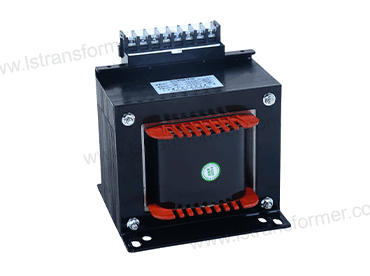
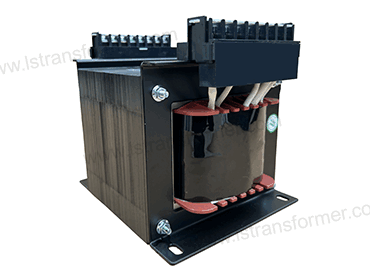
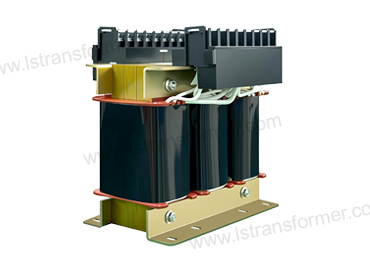
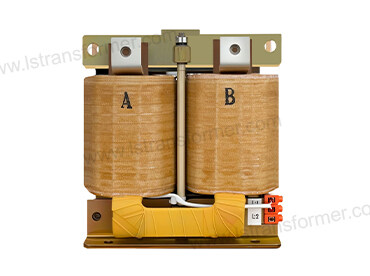
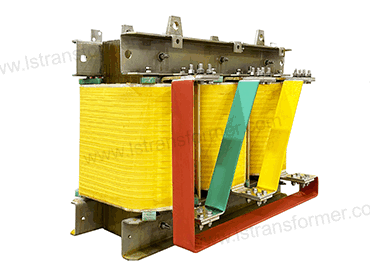
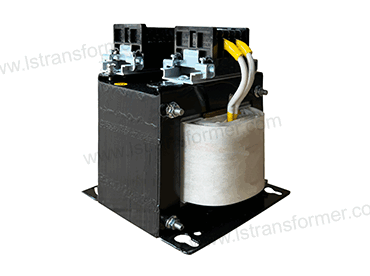
何のメリット単相トランス?

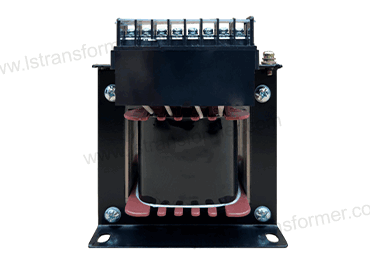
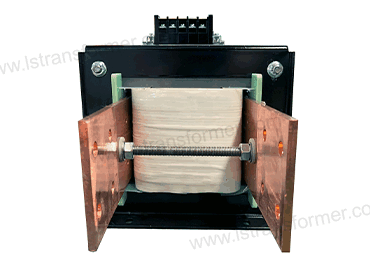
What are the advantages of single-phase transformers? Less material usage: Single-phase transformers require 20% less iron and 10% less copper compared to three-phase transformers of the same capacity. Particularly when using a wound iron core structure, the no-load losses of the transformer can be reduced by more than 15%. This reduction in material usage leads to decreased manufacturing and operational costs, ultimately resulting in optimal life cycle costs. Lower line investment: Implementing a single-phase power supply system in the grid can save 33% to 63% of conductors. Calculated based on economic current density, this can save 42% of conductor weight, and based on mechanical strength, it can reduce conductor consumption
FAQ

維持及び運営の連絡調節トランス

Maintaining and Operating a Contact Regulating Transformer In order to ensure the proper operation and maintenance of a contact regulating transformer, it is important to understand the basic principles and components involved. The primary components of the transformer are the contact coil, two arms, and two contact electrodes. The contact coil is connected to the arms, while the contact electrodes are connected to the DC power supply. When running and maintaining a contact regulating transformer, it is important to keep the contact electrodes clean and free of any debris or corrosion. This can be achieved through regular cleaning and inspection. It’s also important to check that the arms are properly

FAQ

複数の異なる種類の配線の手配のための連絡調節トランス.

Several different types of wiring arrangements for contact regulating transformers. The most common type is the two-wire arrangement, which is typically used for low voltage applications. This arrangement consists of two leads, one connected to the contact electrode and the other connected to the DC power supply. This type of wiring is the simplest and most efficient way to regulate the voltage output. The three-wire arrangement is also used for low voltage applications, but it allows for slightly more precise control over the output voltage. In this arrangement, an additional lead is connected to the contact electrode, allowing for the voltage output to be shifted as needed. Finally, a four-wire

FAQ

"はどのような特徴があるの接触を制御したトランス?

What are the features of a contact-controlled transformer? The structure of a contact regulating transformer is relatively simple, but engineered with a number of special features. First, the transformer is designed with two or more coils and arms. The two or more coils act as the primary and secondary coils and can be composed of either a single turn or multiple wraps of insulated wire. The arms, which are typically made of metal, are connected to the primary and secondary coils and act as the interface between the two. Second, the transformer is designed with two or more contact electrodes. These are typically made of either a carbon or silver

FAQ

理解の原理の連絡調節トランス

Understanding the Working Principles of Contact Regulating Transformers The working principle of a contact regulating transformer is similar to that of an alternator-regulator system. Essentially, the transformer is designed to control the power output of an AC-DC power supply. The contact regulating transformer is comprised of a contact coil, two arms, and two contact electrodes. The contact coil is connected to the arms, while the contact electrodes are connected to the DC power supply. When the AC current flows through the contact coil, an electromagnetic field is generated which acts on the two arms. The arms then move, connecting the contact electrodes to either the positive or the negative output

FAQ

最初のautotransformerのXuanji高速鉄道が開設

The first autotransformer of Xuanji High-speed Railway was successfully installed A transformer is an electrical device used to convert the voltage of alternating current from one voltage level to another. It mainly consists of one or more coils (called windings) and a magnetic core. When an input current flows in one winding, it creates a magnetic field in the core. This magnetic field is passed through another winding, which produces an output voltage in that winding. A transformer is a very important device in a power system because it converts electrical energy between different voltage levels for power transmission and distribution.A transformer is an electrical device used to convert the

FAQ

を明らかにし、インピーダンス周波数特性の炉から電源周波数から高周波数

Revealing the Impedance-Frequency Characteristics of Reactors  – From Power Frequency to High Frequency In power systems and electronic devices, reactors play a critical role. But did you know that the same reactor exhibits entirely different impedance characteristics at different frequencies? This frequency dependency directly impacts reactor performance in various applications. This article delves into the impedance variation patterns of reactors from power frequency (50/60Hz) to high frequency (kHz range), uncovering the underlying physics and providing practical selection guidelines. Whether you’re a power engineer, electronic designer, or technician in related fields, understanding these characteristics will help you choose and use reactors more effectively. Content 1. Reactor Impedance Basics: The Inductive-Dominant Nature

FAQ

どのように制御型変圧器の温度上昇に高温環境? —相乗的なデザインの耐熱絶縁材料は、強制空冷

How to Control Transformer Temperature Rise in High-Temperature Environments? —Synergistic Design of Heat-Resistant Insulation Materials and Forced Air Cooling Against the backdrop of global warming and increasing industrial demand, the stable operation of transformers in high-temperature environments has become a major challenge for the power industry. This article delves into a comprehensive solution for controlling transformer temperature rise through the synergistic design of heat-resistant insulation materials and forced air cooling systems. It aims to help users understand the essence of this complex technical issue and the strategies to address it. Content 1. Impact of High-Temperature Environments on Transformers and the Importance of Temperature Rise Control Transformers, as core equipment in

FAQ

の比較については、コア部分放電検出技術がもたらす深い分析の原理の利点と応用

Comparison of the Four Core Partial Discharge Detection Technologies: In-Depth Analysis of Principles, Advantages, and Applications In the field of safety maintenance for high-voltage electrical equipment, Partial Discharge Detection (PD Detection) plays a critical role as an early warning system. As global power grids demand higher reliability for key assets such as transformers and reactors, mastering accurate and efficient PD detection technologies has become an industry consensus. This guide provides a detailed analysis of the four mainstream international detection methods: the Pulse Current Method (IEC 60270 Standard), Ultrasonic Method (Acoustic Emission), Ultra-High Frequency (UHF) Method, and Transient Earth Voltage (TEV) Method, helping you develop a scientific equipment health management strategy.

FAQ

どのようなシールできる油入変圧器?

What kind of sealing material should be chosen for oil-immersed transformers? Choosing sealing materials that are compatible with the characteristics of transformers is crucial. Technical conditions related to sealing materials include the working medium, working pressure, and working temperature. The working medium mainly involves transformer oil, air, and water. The working pressure is primarily determined by the steady-state pressure generated inside the transformer during fault conditions and the pressure applied during the sealing test (usually the test pressure of components is higher than that of the transformer body), typically ranging from 0.3 to 0.5 MPa. The working temperature is not determined by the highest temperature during the normal operation of

WhatsAppにQR WeChat QR sales@hnlsdz.com
スクロールトップ