





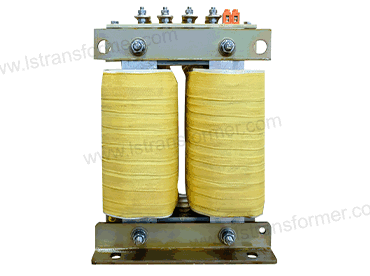
う用途での炉?

ホーム > FAQ > ページ 22
FAQ

う用途での炉?

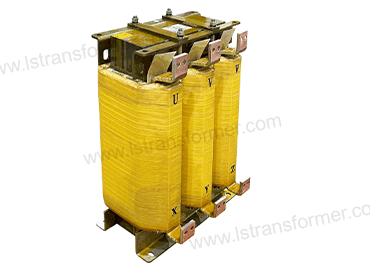
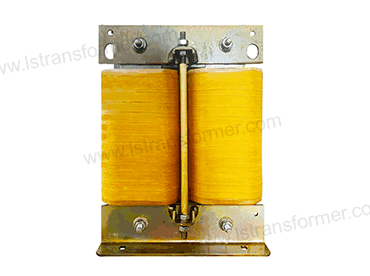
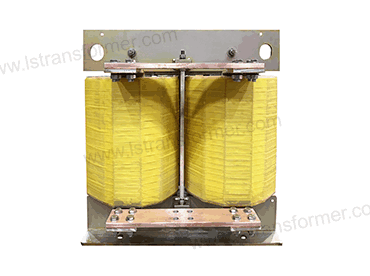
Reactors find a wide range of applications across various industries. They are used to control current, voltage, and frequency in electrical systems. Here are some of the most common applications of reactors: Power transmission: Reactors are used in power transmission systems to limit the flow of current and to protect equipment from voltage surges. (1) Motor control: Reactors are used in motor control circuits to limit the inrush current and to protect the motor from voltage spikes. (2) Lighting systems: Reactors are used in lighting systems to reduce the flicker caused by variations in the power supply. (3) Welding machines: Reactors are used in welding machines to provide a stable
FAQ

Erreicht die Abkühlung des Transformators durch zirkulierende öl, dienen die Zweck von Temperatur Reduktion.

Resistors are essential components of any circuit and play an important role in providing current and voltage control as well as noise reduction. When designing a circuit, it is important to pick the right type of resistor for the application. One of the important parameters to consider when selecting a resistor is the core material, which is usually either copper or aluminum. Copper and aluminum cores have different electrical and thermal properties, so it is important to understand the differences between them. In terms of electrical properties, copper is a better conductor than aluminum. Copper has a much lower electrical resistance, which means that it can handle higher currents. This

FAQ

決定の寿命炉?

A reactor, or an inductor, is a passive electronic component that stores energy in a magnetic field when current flows through it. It is widely used in many electronic circuits, such as power supplies, filters, and amplifiers. However, like any other electronic component, a reactor has a limited lifespan and can fail prematurely if not used properly. So, what determines the lifespan of a reactor? The primary factor that affects the lifespan of a reactor is the amount of current it is subjected to. The higher the current, the more stress is placed on the reactor’s winding and core, which can lead to insulation breakdown, overheating, and eventually, failure. Therefore,

FAQ

What Are the Important Considerations for Vacuum-Impregnation of Transformers?

Vacuum-impregnation of transformers is an important process that must be carefully considered in order to ensure optimal performance and reliability. There are several important considerations that should be taken into account when performing the impregnation process. The first consideration is the type of insulation material used for the impregnation. The insulation material used must be of the correct type and be able to withstand the voltage and current that will be flowing through the transformer. The insulation material should also be able to handle temperature fluctuations and high temperatures. The second consideration is the vacuum chamber used for the impregnation process. It is important to ensure that the chamber is

FAQ

はインダクター及び原子炉と同じこんなことをしたのだろう。

In the world of electrical engineering, the terms “inductor” and “reactor” are often used interchangeably. However, while these two components share some similarities, they are not actually the same thing. An inductor, also known as a coil, is a passive electrical component that stores energy in a magnetic field when an electrical current flows through it. Inductors are commonly used in circuits to regulate current, filter noise, and store energy. A reactor, on the other hand, is a type of inductor that is specifically designed to provide a reactive impedance to a circuit. This reactive impedance can be either inductive or capacitive, and it is used to control the flow

FAQ

Vacuum Epoxy Casting Technology and Equipment Requirements for Transformer

Transformers are essential components used in electric power systems and many industrial applications. The use of vacuum epoxy casting technology in transformer production has become more and more popular due to its good performance. Vacuum epoxy casting technology is a process of using vacuum and high temperature to cast the transformer. The process has the advantages of fast cooling speed and uniform heating of the internal and external parts of the transformer. In this process, the internal structure of the transformer can be controlled strictly, and the transformer product can be improved in terms of quality, insulation performance, heat dissipation, etc. The main equipments of the vacuum epoxy casting process

FAQ

の影響のミスマッチングインダクター、コンデンサ

When a reactor and a capacitor are connected in parallel in an AC circuit, they can act as a filter that blocks certain frequencies while allowing others to pass through. This is known as a tuned circuit or a resonant circuit. The resonant frequency of the circuit is determined by the values of the reactor and capacitor. However, if the reactor and capacitor are not matched properly, the circuit may not function as intended. If the reactor and capacitor have different resonant frequencies, the circuit may pass unwanted frequencies and attenuate the desired frequencies. This can lead to distorted signals, increased harmonics, and decreased power quality. In extreme cases, it

FAQ

Manufacturing Process of Vacuum Epoxy Resin Cast Transformer

Vacuum epoxy resin cast transformers are widely used in various electrical power systems. The manufacturing process of these transformers is a complex and precise procedure that requires attention to every detail. The following are the general steps involved in the manufacturing process of vacuum epoxy resin cast transformers: (1) Core preparation: The first step in the process is the preparation of the transformer core. This involves the cutting and stacking of magnetic laminations to form the core. The core is then clamped together to maintain its shape. (2) Coil winding: After the core preparation, the next step is the winding of the transformer coils. The windings are usually made of

FAQ

の違い空気コアの鉄のコアインダクタ

Differences between Air-Core and Iron-Core Inductors Inductors, or “coils,” are used in electrical circuits to store energy in a magnetic field. There are two types of inductors: air-core and iron-core. The primary difference between them is the material used to create the core. Air-core inductors use a hollow, non-magnetic core, usually made of plastic, ceramic, or some other insulating material. They have low inductance values and are used in high-frequency circuits. Because of their low inductance values, they are less susceptible to distortion and are more stable at high frequencies. Iron-core inductors use a magnetic core, usually made of iron, ferrite, or powdered iron. They have higher inductance values and

FAQ

Structure Design of Vacuum Epoxy Resin Cast Transformer

Vacuum epoxy resin cast transformer is widely used in power systems due to its excellent performance and reliability. The structure design of the transformer plays a crucial role in its overall performance. The core of the vacuum epoxy resin cast transformer is made of high-quality silicon steel sheets, which are insulated by high-strength epoxy resin. The coil is made of high-purity oxygen-free copper wire, which is insulated by multiple layers of high-strength insulating material, such as polyester film, mica tape, and glass fiber cloth. The winding structure of the transformer is designed to minimize the leakage flux and reduce the copper loss, which can improve the efficiency of the transformer.

WhatsAppにQR WeChat QR sales@hnlsdz.com
スクロールトップ