






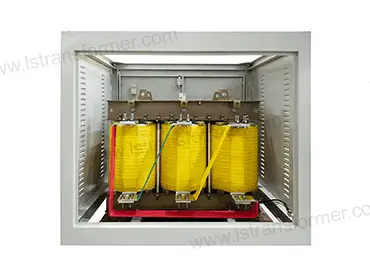
うのを回避するための措置の断熱高齢化のトランス?

ホーム > FAQ > ページ 5
FAQ

うのを回避するための措置の断熱高齢化のトランス?

What are the measures to avoid insulation aging of transformers? Transformers play a key role in the power system, and insulation aging can seriously affect their performance and lifespan. To ensure the safe and stable operation of transformers, it is crucial to take effective measures to avoid insulation aging. Content 1.  Optimize the operating environment (1) Temperature control: Install an effective cooling system, such as the oil – circulation cooling for oil – immersed transformers and the forced – air cooling device for air – cooled transformers. Ensure that the transformer operates within an appropriate temperature range. Generally, the upper – layer oil temperature of the transformer should not exceed the

FAQ

その機能のトランス巻き線?

What are the functions of transformer winding? In transformers, winding play a crucial role. They are like the “heart” of a transformer and are directly related to the performance and function of the transformer. This article will discuss in detail the important functions played by winding in transformers. Content 1. Constituting the internal circuit The transformer winding constitute the internal circuit of the equipment. It is the main channel for current transmission. It introduces the electric energy from the external power grid into the transformer, is directly connected to the external power grid, and outputs the transformed electric energy of the transformer. By changing the number of turns of the

FAQ

What is on-load voltage regulation of transformers? (Part 2)

What is on-load voltage regulation of transformers? (Part 2) The principle of on-load voltage regulation is to set multiple taps on the high-voltage winding or low-voltage winding of the transformer. By switching the tap changer, different taps are connected to the circuit to change the number of turns of the winding and then adjust the output voltage. Next, we will introduce in detail the disadvantages of on-load voltage regulation. Content 1.High cost The structure of on-load voltage regulation transformers is relatively complex and requires special tap changers and voltage regulation control systems, which makes their manufacturing and maintenance costs relatively high. In addition, the operation of on-load voltage regulation transformers also

FAQ

What is the function of a reactor?

What is the function of a reactor? Reactor commonly used in power systems include series reactors and shunt reactors. Series reactors are primarily used to limit short-circuit currents, and they can also be connected in series or parallel with capacitors in filters to limit high-order harmonics in the grid. Reactors in 220kV, 110kV, 35kV, and 10kV grids are used to absorb reactive power caused by the capacitance of cable lines. The operating voltage can be adjusted by changing the number of shunt reactors. Shunt reactors in ultra-high-voltage systems have various functions related to improving the operation of the power system’s reactive power, including: Mitigating the capacitive effect on lightly loaded

FAQ

How to Suppress Reactor Resonance Overvoltage? – Collaborative Design of Damping Resistors and Filters

How to Suppress Reactor Resonance Overvoltage?  – Collaborative Design of Damping Resistors and Filters In power system operation, the LC resonance circuit formed by reactors and distributed capacitance can generate dangerous overvoltage phenomena. According to measured data from IEEE Std. C57.21-2021, the peak resonance overvoltage can reach 2-3 times the rated voltage, posing a serious threat to equipment safety. This article delves into the collaborative working principles of damping resistors and active filters, revealing their physical mechanisms and engineering implementation methods for suppressing resonance overvoltage. Content 1. Generation Mechanism and Hazards of Resonance Overvoltage 1.1 Physical Process of Resonance Formation Reactor resonance overvoltage originates from the periodic exchange of electromagnetic

FAQ

どのように、避雷器の保護のトランスに行われていますか。

How is the lightning arrester protection of the transformer carried out? The lightning arrester is the most crucial basic component for protecting power generation equipment and transmission and transformation equipment. It also forms the foundation for determining the insulation level of high-voltage electrical equipment. Installed in front of the transformer, the arrester mainly consists of a spark gap and a non-linear resistor (valve plate). When the overvoltage generated by lightning attacks the transformer, it first passes through the arrester. At this point, the spark gap of the arrester discharges, thereby limiting the overvoltage on the insulation of the transformer. During the discharge process, the non-linear resistor with good volt-ampere characteristics

FAQ

の注意事項のためのライブ油ろ過?

What are the precautions for live oil filtration? (1) Throughout the entire process of live oil filtration and degassing, the gas relay circuit of the transformer must be connected to the signal circuit to prevent gas leakage and oil running in the pipeline, causing the oil switch to trip and resulting in a large-scale power outage. (2) The pipelines and joints connecting the oil filter machine and the transformer must be securely tied, with no occurrence of rupture, damage, or gas leakage. (3) For forced oil-cooled and water-cooled transformers, the connected cooler oil pump should not be started, as the excessive oil pump flow can cause the heater of the

FAQ

どのように偏差値のトランスなどのパラメータを用いたパラメータのピーク値を指定できますか。

How are the deviation values of transformer parameters and the parameters using peak values specified? The specifications for evaluating the performance parameters of transformers are determined by technical conditions, and each standard value has corresponding deviation values, which can be categorized into several types: (1) Parameters with only a lower limit specified, without an upper limit, where larger values are better: a.Absorption ratio, insulation resistance; b. Distance between bushings with voltage; c. Insulation withstand capability; d. Local discharge test time and frequency, AC withstand voltage test time and frequency; e. Electrode surface; f. Number of impulse short-circuit tests; g. Number of impact tests; h. Electrical and mechanical lifespan of on-load

FAQ

どのように、トランス油試験が行なわれるのですか?

How is the testing of transformer oil conducted? The dielectric strength test of transformer oil is conducted using a 500mm³ standard oil cup in a 60kV AC frequency oil tester. The brass electrodes of the oil cup have a diameter of 25mm, and the surface cleanliness is as shown in Figure 92—6, with an electrode spacing of 2.5mm. Firstly, the oil cup is rinsed with the test oil for at least three times. Subsequently, the test oil is poured into the cup until it reaches 10mm below the cup’s rim, and then left undisturbed for 10 minutes to eliminate bubbles. The voltage is gradually increased until breakdown occurs, and the

FAQ

はどのように測定絶縁抵抗の吸収率が行なわれるのですか?

How is the measurement of insulation resistance and absorption ratio conducted? Insulation resistance, denoted as R, is typically determined by applying a voltage of 2500V for 60 seconds and measuring the resulting value using a megohmmeter with a maximum range of 10000 MQ. Due to variations in the stability of insulation resistance arising from differences in product geometry, structure, material, and moisture content within the insulation, there is no standardized value for R. To provide a rough constraint on R and depict its relationship with temperature, the absorption ratio (Ro/Rs) is the ratio of insulation resistance measured during direct current application for 60 seconds and 15 seconds (for large transformers,

WhatsAppにQR WeChat QR sales@hnlsdz.com
スクロールトップ

