





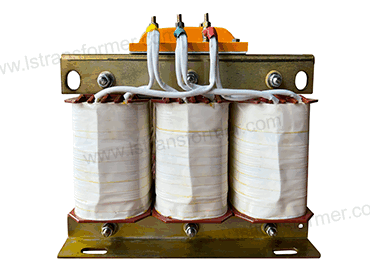
What are the Causes and Prevention Methods for Positive Tolerance Exceeding on Both Sides of the Maximum Diameter of the Core?

ホーム > 投稿者: 369703005 > ページ 10
FAQ

What are the Causes and Prevention Methods for Positive Tolerance Exceeding on Both Sides of the Maximum Diameter of the Core?

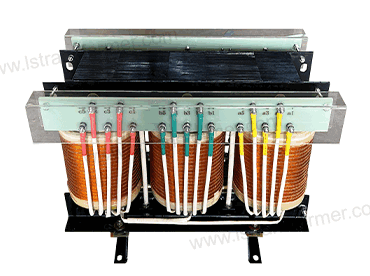
What are the Causes and Prevention Methods for Positive Tolerance Exceeding on Both Sides of the Maximum Diameter of the Core? Content 1.Cause Analysis (1) Thickness Deviation During Core Stacking: During the core stacking process, if the thickness of the laminations in each layer is generally thicker, it will directly result in the overall thickness and diameter of the core exceeding the specified tolerance. This typically occurs due toinconsistencies in lamination thickness during manufacturing or handling, or a lack of effective thickness control during stacking.   (2) Misalignment of Core Laminations: If the laminations of the core exhibit significant left-right misalignment, it will lead to an irregular geometric shape of the core, […]
FAQ

How to consider the lifespan of reactors?

How to consider the life span of reactors? The service life of a reactor refers to the period during which it can operate reliably under rated load conditions. The length of this service life is determined by the properties of the manufacturing materials and the conditions of the operating environment. The primary materials used in reactors include metal materials and insulating materials, and their characteristics directly affect the reactor’s service life and performance stability. Content 1. Influence of Materials on Service Life The manufacturing materials of reactors are categorized intometal materials and insulating materials. Metal materials primarily determine theelectromagnetic performance of the reactor. They usually have high-temperature resistance and good conductivity, thus offering

FAQ

What are the application ranges of input reactors?

What are the application ranges of input reactors? Input reactors play a crucial role in power systems, particularly in enhancing power quality and protecting electrical equipment. The following are the main characteristics and detailed functions of input reactors: Content 1. Applicable for Reactive Power Compensation and Harmonic Mitigation: Input reactors are widely used for reactive power compensation and harmonic mitigation. They regulate reactive power in the power system by providing reactance, thus optimizing the power factor. Additionally, input reactors possessfiltering capabilities that effectively address harmonics. Harmonics are current waveform distortions generated by nonlinear loads and power electronic devices. Input reactors, in conjunction with capacitors, form filters that reduce the impact of harmonics on

FAQ

What Impact Does Wire Quality Have on Transformers?

What Impact does Wire Quality have on Transformers? As a fundamental component of transformer windings, the quality of wire has a profound and crucial influence on the overall performance, operational reliability, and service life of transformers. High-quality wire can ensure the stable and efficient operation of transformers, while defective wire may lead to a series of serious problems. The following details the specific impacts: Content 1. Insulation Performance If there are quality defects such as sharp corners, burrs, or impurities on the wire surface, after being wrapped with turn insulation paper, these flaws can easily puncture the turn insulation, resulting in a local reduction of the turn insulation. When the transformer

FAQ

How to Improve the Drying Quality of Transformer Winding?

How to Improve the Drying Quality of Transformer Winding? The drying quality of winding plays a decisive role in the performance and reliability of electrical equipment such as transformers. High-quality drying treatment can ensure good insulation performance and stable dimensions of the winding, thereby guaranteeing the safe and stable operation of the equipment during long-term operation. To achieve high-quality winding drying, multiple key factors need to be comprehensively considered and effective measures should be taken. Content 1. Precise Control of Drying Temperature Drying temperature is one of the core elements affecting the drying quality of winding. An appropriate temperature can accelerate the evaporation of moisture in the insulating materials and improve

FAQ

What are the purposes of transformer winding drying?

What are the purposes of transformer winding drying? TransformerWinding are a crucial component of electrical equipment such as transformers, and their performance is directly related to the operational reliability and safety of the entire equipment. Winding drying is an extremely important treatment process with several key purposes. The specific purposes are as follows: Content 1. Improving electrical insulation strength Under normal circumstances, the insulating materials in windings contain a certain proportion (6% – 8%) of moisture. Under the action of an electric field, this moisture will ionize and conduct electricity, forming leakage current paths, thereby reducing the resistivity of the insulating materials and severely weakening their electrical insulation performance. When the equipment operates

FAQ

What is the core loss of a transformer?

What is the core loss of a transformer? The core plays a crucial role in electrical equipment such as transformers and motors, and core loss is an important factor that affects the performance and efficiency of these devices. Understanding the composition of core loss and its influencing factors has far-reaching significance for the optimal design, efficient operation, and energy conservation of the equipment. Content 1. Hysteresis Loss Hysteresis loss mainly stems from the material properties of silicon steel sheets. Different silicon steel sheets have different hysteresis loops, and the area enclosed by the hysteresis loop directly reflects the magnitude of the hysteresis loss. For high-quality silicon steel sheets, their hysteresis loops

FAQ

What are the Reasons for the Noise Generated by Transformers?

What are the Reasons for the Noise Generated by Transformers? Transformers will inevitably generate noise during operation. Understanding the reasons for the noise is crucial for reducing noise, optimizing transformer performance, and ensuring the stable operation of the power system. The sources of transformer noise are relatively complex and can mainly be attributed to the following aspects. Content 1. Magnetostrictive Effect of Silicon Steel Sheets Silicon steel sheets are the main constituent materials of transformer cores. When the silicon steel sheets are magnetized, the magnetic domain molecules inside them will repeatedly expand and contract with the periodic changes of the magnetic field. This molecular movement at the microscopic level has a

FAQ

What impacts will insulation aging have on transformers?

What impacts will insulation aging have on transformers? Transformers are crucial equipment in the power system, and their normal operation is of vital importance for ensuring the stability and reliability of power supply. The insulation system is an essential part of transformers. However, insulation aging will cause numerous impacts on transformers. Next, we will explore the corresponding impacts in depth. Content 1. Decline in Electrical Performance As the insulation ages, its insulation resistance decreases. This means that the leakage current inside the transformer increases, which may lead to the intensification of partial discharge phenomena. The energy generated by partial discharge will further accelerate the insulation aging, forming a vicious cycle.

FAQ

その特徴用している巻線変圧器? (その2)

What are the characteristics of using flat winding for transformers? (Part 2) In the previous article, we introduced the advantages of flat winding. However, compared with vertical winding, flat winding also has some disadvantages, which will be explained one by one below. Content 1. Low space utilization The flat winding method occupies a large space in the horizontal direction. For some application scenarios with limited space, it may be restricted. Compared with vertical winding, it is difficult for flat winding to achieve a higher number of winding turns in the same space, which may affect the voltage transformation ability of the transformer. For example, in some compact electronic devices, flat

WhatsAppにQR WeChat QR sales@hnlsdz.com
スクロールトップ