





What are the routine electrical tests for transformers? (Part 1)

ホーム > FAQ > ページ 10
FAQ

What are the routine electrical tests for transformers? (Part 1)

What are the routine electrical tests for transformers? (Part 1) Transformers play a central role in power transmission and distribution, and their stable operation is related to the safety of the entire power system. Routine electrical tests are important means to detect the performance of transformers and discover potential faults. Content 1. Voltage ratio test The voltage ratio test is mainly used to verify whether the voltage ratio of the transformer meets the design requirements. Through this test, it can be detected whether there are short circuits between turns or layers of the winding and whether the switch leads are wrongly connected. In actual operation, accurately measuring the voltage ratio
FAQ

その応用範囲の入力炉?

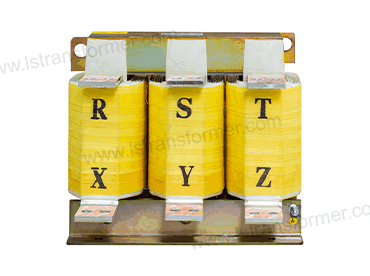
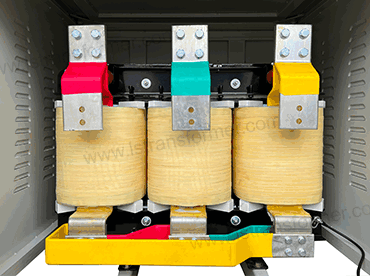
What are the application ranges of input reactors? Input reactors play a crucial role in power systems, particularly in enhancing power quality and protecting electrical equipment. The following are the main characteristics and detailed functions of input reactors: Content 1. Applicable for Reactive Power Compensation and Harmonic Mitigation: Input reactors are widely used for reactive power compensation and harmonic mitigation. They regulate reactive power in the power system by providing reactance, thus optimizing the power factor. Additionally, input reactors possessfiltering capabilities that effectively address harmonics. Harmonics are current waveform distortions generated by nonlinear loads and power electronic devices. Input reactors, in conjunction with capacitors, form filters that reduce the impact of harmonics on

FAQ

What should be noted when assembling the transformer winding? (2)

What should be noted when assembling the transformer winding? (2) In transformer manufacturing, the winding assembly process is of crucial importance and directly relates to the performance and operational reliability of the transformer. The following focuses on the key points in the winding assembly process. Content 1. Symmetry and alignment in the height direction (1) Height difference and reasons of high-voltage and low-voltage windings:  Winding assembly needs to maintain symmetry in the height direction. Due to the high voltage to ground, the high-voltage winding has a large insulation distance and is generally shorter than the low-voltage winding. Moreover, due to manufacturing tolerances, there are tolerances in the heights of high-voltage

FAQ

What should be noted when assembling the transformer winding? (1)

What should be noted when assembling the transformer winding? (1) In transformer manufacturing, the winding assembly process is of crucial importance and directly relates to the performance and operational reliability of the transformer. The following focuses on the key points in the winding assembly process. Content 1. Precise control of winding direction The winding direction is the primary focus in winding assembly. For the windings of small and medium-sized three-phase transformers, they usually have the same winding direction to ensure that the magnetic field lines form a complete loop within the iron core and achieve normal electromagnetic conversion. If the winding direction is incorrect, the path of the magnetic field

FAQ

何かの機能構造特性-役割のアーク抑制にコイルを電力グリッドとは?

What is the Function of Structure Characteristics and Role of Arc Suppression Coil in Power Grid? Arc suppression coils are vital protective devices in power systems, primarily used to suppress overvoltage caused by grounding faults, ensuring the safety and stability of electrical equipment. Their design and structural features play a crucial role in the power grid. Below, we delve into the structure characteristics of arc suppression coils and their specific functions in the grid. 1. Structure Characteristics of Arc Suppression Coils: (1) Single-phase Design:  The arc suppression coil adopts a single-phase iron core design, suitable for addressing single-phase grounding faults in power systems. Compared to three-phase reactors, its simpler structure

FAQ

理由は複数のワイヤーをコイル巻線?

What are the Reasons for Using Multiple Wires in Coil Windings? In electrical engineering, coils are often designed with multiple wires wound together, a choice based on several technical considerations. Here are some key reasons: Content 1. Reducing Eddy Current Losses  Eddy current losses are significant factors affecting the efficiency of coils. When current flows through a wire, in addition to resistive losses, eddy currents are generated due to the distribution of current within the wire. Eddy current losses are closely related to the thickness of the wire; if the thickness doubles, the eddy current losses increase fourfold. Therefore, when a coil needs to carry a large current, using multiple

FAQ

その絶縁材料システムのための樹脂キャストトランス?

What are the Insulation Material Systems for Resin-Cast Transformers? Resin-cast transformers use epoxy resin as the primary insulation material, forming a solid structure through casting and curing. This structure has high mechanical strength and excellent insulation properties. Additionally, these transformers have good heat dissipation and are suitable for harsh environments, making them ideal for applications in subways, hospitals, airports, and other places where reliability is crucial. Here, we introduce the types of insulation material systems for resin-cast transformers. Currently, there are two insulation material systems for resin-cast transformers: “pure resin casting with high-fill glass fiber reinforcement” and “resin quartz powder casting with locally reinforced pre-impregnated glass mesh.” Content 1. Pure

FAQ

どのように低減無負荷時の損失のトランス?

How to Reduce No-Load Losses in Transformers? No-load losses in transformers refer to the power consumed when the transformer’s secondary winding is open (i.e., not connected to a load). These losses mainly include core losses and stray magnetic losses. No-load losses are inherent to the transformer’s operation and have a certain impact on the stability of both the power grid and the transformer itself. The following sections will introduce methods to reduce these no-load losses. Content 1. Transformer material (1) Reduce the Magnetic Flux Density of the Transformer Core No-load losses are proportional to the square (or 1.2 power) of the magnetic flux density of the core. Therefore, an excessively

FAQ

何のプロセスとその原因で絶縁高齢化?

What are the Processes and Causes of Insulation Aging? Insulation aging is a common issue in the operation of electrical equipment, which affects the performance and lifespan of the devices. The main causes of insulation aging can be attributed to thermal, electrical, mechanical stress, and environmental factors. Below is a brief analysis of the aging processes and specific causes: Content 1. Thermal Aging   During the operation of electrical equipment, insulation materials generate a significant amount of heat due to energy loss. Prolonged exposure to high temperatures leads to the oxidation and thermal decomposition of insulation materials, gradually reducing their mechanical strength. Under these high-temperature conditions, the insulation becomes brittle,

FAQ

その特徴箔の巻線?

What are the characteristics of foil winding? Foil winding are a type of winding structure commonly used in transformers and reactors, offering unique advantages that enhance both the performance and manufacturing efficiency of electrical equipment. The main characteristics of foil winding are as follows: Features 1. High Automation and Efficiency in Production  The production of foil winding is typically carried out on specialized winding machines, which are highly automated. This automation increases production efficiency, reduces human error, and ensures consistent product quality. Due to the wide and flat structure of the foil, the winding process is relatively simple, enabling efficient mass production, which meets the high-quality demands of modern electrical

WhatsAppにQR WeChat QR sales@hnlsdz.com
スクロールトップ