





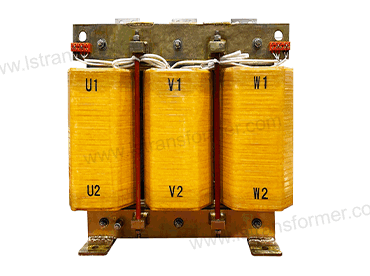
Why Does Solar Power Plant Output Drop Suddenly? —Core Causes and Smart Solutions for Reactor Failures

ホーム > FAQ > ページ 35
FAQ

Why Does Solar Power Plant Output Drop Suddenly? —Core Causes and Smart Solutions for Reactor Failures

Why Does Solar Power Plant Output Drop Suddenly? —Core Causes and Smart Solutions for Reactor Failures As global photovoltaic (PV) capacity exceeds 1 terawatt (TW), solar plant operators face growing operational challenges. According to the International Energy Agency (IEA), 23% of solar power generation losses are directly linked to reactor failures, causing annual economic losses exceeding $5 billion. This article analyzes the root causes of reactor malfunctions and provides actionable solutions to restore 99% power generation efficiency, ensuring long-term profitability for solar plants. Content 1. Three Core Causes of Reactor Failures in Solar Plants 1.1 Harmonic Resonance: The Invisible Threat to Inverters and Grids (1) Issue: PV inverters generate 5th and
FAQ

What Are the Special Process Requirements for Center Tap Termination in High-Frequency Transformers?

What Are the Special Process Requirements for Center Tap Termination in High-Frequency Transformers? High-frequency transformers play a critical role in modern electronic devices, especially in switch-mode power supplies, inverters, and RF circuits. The center tap, as a key design feature of high-frequency transformers, directly impacts their performance, efficiency, and reliability. This article explores the special process requirements for center tap termination in high-frequency transformers, helping design engineers and manufacturers optimize product performance while meeting international standards and industry best practices. Content 1. Basic Concept and Importance of Center Tap in High-Frequency Transformers Compared to low-frequency transformers, high-frequency transformers (HFTs) typically operate at frequencies above 20kHz, with some applications reaching MHz

FAQ

The Smart Grid Era: Evolution of Digital Transformer Technology

The Smart Grid Era: Evolution of Digital Transformer Technology The global energy system is undergoing a profound transformation driven by smart grid technology. According to the International Energy Agency (IEA), global investments in smart grids are projected to exceed $400 billion by 2030. As the “nerve nodes” of power grids, digital transformers are evolving from traditional equipment into intelligent terminals integrated with sensing, computing, and communication capabilities. Through real-time data collection, edge analytics, and predictive maintenance, digital transformers enhance grid efficiency to over 99% while reducing operational costs by 30%-50%. This article explores the core technological pathways of digital transformers, aligned with international standards such as IEC 61850 and IEEE

FAQ

Why Are High-Power Transformers More Likely to Use Flat Copper Wire Instead of Round Copper Wire?

Why Are High-Power Transformers More Likely to Use Flat Copper Wire Instead of Round Copper Wire? In power transmission and distribution systems, transformers are core equipment whose performance directly affects the efficiency and stability of the entire grid. In recent years, with the continuous growth of power demand and the improvement of energy efficiency standards, the optimization of high-power transformer design has become a focus in the industry. A notable trend is that more and more high-power transformers are adopting flat copper wire instead of traditional round copper wire as the winding material. This design choice is backed by profound engineering considerations and physical principles. This article will delve into

FAQ

How to Compensate for Three-Phase Imbalance? —A Step-by-Step Breakdown of Reactor + SVG Hybrid Mitigation Solution

How to Compensate for Three-Phase Imbalance? —A Step-by-Step Breakdown of Reactor + SVG Hybrid Mitigation Solution In industrial plants, data centers, and renewable energy power stations, “three-phase imbalance leading to soaring line losses and equipment damage” has become a core pain point in global power systems. According to IEEE 1159 standards, a 10% three-phase imbalance can reduce transformer efficiency by 6% and increase cable losses by 200%. This article, based on international standards such as IEC 61000-3-6 and ANSI C84.1, provides an in-depth analysis of the collaborative mitigation principles of reactors and Static Var Generators (SVG), along with cross-regional engineering validation data. Content 1. Causes of Three-Phase Imbalance and Quantified

FAQ

​Key Points of Explosion-Proof Design for Oil-Immersed Transformers: How Do Pressure Relief Devices and Gas Relays Work Together?

Key Points of Explosion-Proof Design for Oil-Immersed Transformers: How Do Pressure Relief Devices and Gas Relays Work Together? Oil-immersed transformers are widely used in global power infrastructure due to their excellent insulation and heat dissipation capabilities. However, internal faults can lead to a rapid increase in pressure and decomposition of insulating oil, posing a serious risk of explosion. The International Electrotechnical Commission (IEC) and IEEE standards emphasize the importance of explosion-proof systems for transformer safety. This article delves into the working principles, collaborative mechanisms, and design considerations of two core explosion-proof components—the pressure relief device (PRD) and the gas relay (Buchholz relay)—to help power engineers and maintenance personnel fully understand

FAQ

Lightning and Surge Protection:Innovations in Transformer Insulation Technology

In the context of the accelerating global interconnection of power grids, transformers—as core equipment for energy transmission—face severe challenges related to lightning strikes and surges (transient overvoltages). According to data from the International Energy Agency (IEA), transformer failures caused by lightning strikes result in annual economic losses exceeding $5 billion USD, with tropical regions (e.g., Southeast Asia, Africa) accounting for 60% of these losses. To address this challenge, international standards (such as IEC 60076 and IEEE C62.41) are continuously updated, driving innovations in insulation materials, structural design, and monitoring technologies. This article explores how transformer protection can be enhanced through technological advancements, focusing on three key dimensions: damage mechanisms, material

FAQ

Can Power Be Restored Immediately After a Heavy Gas Trip? —Detailed Process of Fault Gas Chromatography Analysis

Can Power Be Restored Immediately After a Heavy Gas Trip? —Detailed Process of Fault Gas Chromatography Analysis When a transformer’s heavy gas element (Buchholz Relay Heavy Gas Element) trips, operators face a critical question: Can power be restored immediately? This decision directly impacts equipment safety and grid stability. Incorrect judgments may worsen the fault, potentially leading to fires or explosions. Global power industry data shows that blindly restoring power after a heavy gas trip is a leading cause of severe transformer failures. Therefore, before taking any action, a scientific fault gas chromatography analysis (DGA) must be conducted to determine the fault type, following international standards (e.g., IEC 60599, IEEE C57.104).

FAQ

How to Suppress Reactor Resonance Overvoltage? – Collaborative Design of Damping Resistors and Filters

How to Suppress Reactor Resonance Overvoltage?  – Collaborative Design of Damping Resistors and Filters In power system operation, the LC resonance circuit formed by reactors and distributed capacitance can generate dangerous overvoltage phenomena. According to measured data from IEEE Std. C57.21-2021, the peak resonance overvoltage can reach 2-3 times the rated voltage, posing a serious threat to equipment safety. This article delves into the collaborative working principles of damping resistors and active filters, revealing their physical mechanisms and engineering implementation methods for suppressing resonance overvoltage. Content 1. Generation Mechanism and Hazards of Resonance Overvoltage 1.1 Physical Process of Resonance Formation Reactor resonance overvoltage originates from the periodic exchange of electromagnetic

FAQ

Which is More Reliable: Laser Welding, Soldering, or Cold Crimping?​ —A Comparison of Winding Wire Joining Processes

Which is More Reliable: Laser Welding, Soldering, or Cold Crimping? —A Comparison of Winding Wire Joining Processes In the manufacturing of transformers and reactors, the choice of joining process directly impacts device efficiency, lifespan, and failure rates. Laser welding, soldering, and cold crimping exhibit significant differences in conductivity, mechanical strength, and thermal stability. Each method also carries potential failure risks that require careful evaluation. For example, the heat-affected zone (HAZ) in laser welding may cause uneven high-frequency current distribution, the low melting point of soldering can lead to secondary short circuits during overloads, and micro-voids in cold crimping may increase contact resistance over time. This article compares the core metrics

WhatsAppにQR WeChat QR sales@hnlsdz.com
スクロールトップ