






その特性のディスク-typewinding?

ホーム > 投稿者: 369703005 > ページ 2
FAQ

その特性のディスク-typewinding?

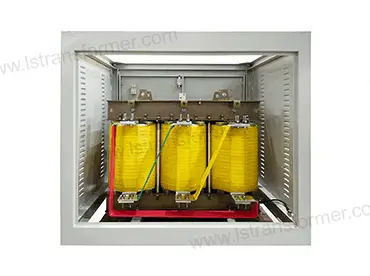
What are the characteristics of disc–type winding? Among the many types of transformerwinding, disc-typewinding have remarkable characteristics and are widely used. Disc-typewinding are mainly used in high-voltage transformers with higher voltages and larger capacities. For example, in large power transformers, their good mechanical and heat dissipation properties can adapt to the high electric field intensity, large current, and complex heat exchange requirements brought by high voltages and large capacities. A thorough understanding of the characteristics of disc-typewinding helps us better understand their applicability in different scenarios. The following will elaborate on them in detail. Content 1. Structural characteristics Disc-typewinding consist of multiple disc-shaped coils. Each disc-shaped coil is formed by winding the wire in a […]
FAQ

うのを回避するための措置の断熱高齢化のトランス?

What are the measures to avoid insulation aging of transformers? Transformers play a key role in the power system, and insulation aging can seriously affect their performance and lifespan. To ensure the safe and stable operation of transformers, it is crucial to take effective measures to avoid insulation aging. Content 1.  Optimize the operating environment (1) Temperature control: Install an effective cooling system, such as the oil – circulation cooling for oil – immersed transformers and the forced – air cooling device for air – cooled transformers. Ensure that the transformer operates within an appropriate temperature range. Generally, the upper – layer oil temperature of the transformer should not exceed the

FAQ

その機能のトランス巻き線?

What are the functions of transformer winding? In transformers, winding play a crucial role. They are like the “heart” of a transformer and are directly related to the performance and function of the transformer. This article will discuss in detail the important functions played by winding in transformers. Content 1. Constituting the internal circuit The transformer winding constitute the internal circuit of the equipment. It is the main channel for current transmission. It introduces the electric energy from the external power grid into the transformer, is directly connected to the external power grid, and outputs the transformed electric energy of the transformer. By changing the number of turns of the

FAQ

What is on-load voltage regulation of transformers? (Part 2)

What is on-load voltage regulation of transformers? (Part 2) The principle of on-load voltage regulation is to set multiple taps on the high-voltage winding or low-voltage winding of the transformer. By switching the tap changer, different taps are connected to the circuit to change the number of turns of the winding and then adjust the output voltage. Next, we will introduce in detail the disadvantages of on-load voltage regulation. Content 1.High cost The structure of on-load voltage regulation transformers is relatively complex and requires special tap changers and voltage regulation control systems, which makes their manufacturing and maintenance costs relatively high. In addition, the operation of on-load voltage regulation transformers also

FAQ

What is the function of a reactor?

What is the function of a reactor? Reactor commonly used in power systems include series reactors and shunt reactors. Series reactors are primarily used to limit short-circuit currents, and they can also be connected in series or parallel with capacitors in filters to limit high-order harmonics in the grid. Reactors in 220kV, 110kV, 35kV, and 10kV grids are used to absorb reactive power caused by the capacitance of cable lines. The operating voltage can be adjusted by changing the number of shunt reactors. Shunt reactors in ultra-high-voltage systems have various functions related to improving the operation of the power system’s reactive power, including: Mitigating the capacitive effect on lightly loaded

FAQ

How to conduct a pump test for oil-immersed transformers?

How to conduct a pump test for oil-immersed transformers? Performing a pump test for oil-immersed transformers is an essential step in the production and maintenance processes. For transformers that have completed the assembly, especially those with a capacity of 8000kVA, voltage of 35kV and below, and equipped with an oil storage tank, a pump test must be carried out, as shown in Figure 87-1(a). For transformers with a capacity of 3150kVA, voltage of 60kV and above, the same method can be employed even after oil filling to ensure the quality during transportation and storage. During the pump test, the pump joint should be installed at the plug seat on top

FAQ

How to perform oil leak repair?

How to perform oil leak repair? To achieve oil welding repair, the following measures can be taken: (1) Selection of Welding Method for Oil Leak Repair: Considering the characteristic of rapid heat dissipation in oil leak repair, arc welding should be used for repairs instead of gas welding. (2) Pre-treatment and Welding Measures for Different Oil Leak Conditions: To prevent the oil flow from extinguishing the arc and hindering the fusion of molten droplets, materials such as asbestos rope can be used to pre-seal the leak, and then welding can be carried out. This can eliminate or reduce the oil flow. For leaks that cannot be pre-sealed, such as cracks,

FAQ

できるトランス溶接用のオイル修理対応は?

Can transformers be welded with oil for repair? The repair of oil leakage in transformer welding lines is a crucial task for operating personnel. If welding repairs are conducted during a power outage with oil drainage, the transformer body remains inside the oil tank. As the insulation on the transformer body is already impregnated with oil, there will still be residual oil and gas in the tank. During arc welding repairs, the oil and gas are prone to combustion due to the heat generated by the electric arc. If the decision is made to completely dismantle the transformer for oil drainage and welding repairs, it entails a significant amount of

FAQ

がなぜ必要なの埋窒素の解体部品などのケースでの輸送? とるのはなぜで取り除くのに必要な石油貯蔵タンクの安全管中の真空油注射

Why is it necessary to fill nitrogen and dismantle components such as casings during transportation?   And why is it required to remove the oil storage tank and safety duct during vacuum oil injection? When the transport weight of a large transformer exceeds the carrying capacity of the transport vehicle, it is necessary to release the oil for transportation. However, once the oil is released, the core and winding inside the oil tank come into contact with the air. Although the air contains 75% nitrogen, the nitrogen in the air contains moisture. Contact with the surface of the core can lead to rusting, and contact with the winding can cause moisture

FAQ

何に留意すべき期間中、溶接のつなが変圧器、電圧60kVとしますのでご注意ください。▼

What should be noted during the welding of leads for transformers with a voltage of 60kV and above? When welding leads for transformers with a voltage of 60kV and above, the following precautions should be taken: Before welding the leads, it is essential to wrap the base of the leads to be welded with wet asbestos rope and cover the winding with tarpaulin. The welding flux should be prepared as needed, but the usage time should not exceed 8 hours. After welding, it is necessary to remove welding flux, oxide residue, insulation scorching, and any burrs. The welding area should be covered with shielding material to prevent local discharge. If

WhatsAppにQR WeChat QR sales@hnlsdz.com
スクロールトップ