





何の目的測定の無負荷電圧および無負荷電流?

ホーム > FAQ > ページ 8
FAQ

何の目的測定の無負荷電圧および無負荷電流?

What is the purpose of measuring the no-load voltage and no-load current? Measuring the no-load voltage and no-load current is a critical aspect of assessing transformer performance and quality. These measurements can reveal the operational status and characteristics of the transformer under no-load conditions, providing essential data support for design, manufacturing, and maintenance. The primary objectives of measuring no-load voltage and no-load current are as follows: Content 1. Verification of Transformer Design Parameters: When the no-load losses of a transformer are minimal, the no-load voltage is essentially equal to the induced voltage, and the ratio of the primary to secondary no-load voltages is equal to the turns ratio. By measuring
FAQ

どのよう炉の分類?

How are reactors classified? Dry-type transformers possess numerous notable characteristics that confer unique advantages and applicability in specific scenarios. Content 1. Insulation and Cooling Properties: Dry-type transformers use air as the insulating medium. Compared to oil-immersed transformers, the insulation strength and cooling performance of air are relatively inferior. To compensate for these deficiencies, dry-type transformer designs typically require the use of more insulation materials. Consequently, the material consumption of dry-type transformers is relatively high, making them ideal for environments with high fire safety requirements, such as subways, public buildings, workshops, and hydropower stations. 2. Impulse Voltage Withstand Capability: Despite using air as the insulating medium, dry-type transformers must withstand certain

FAQ

のの定義は、無負荷特性の計測?

What is the definition of the no-load characteristics measurement? The measurement of a transformer’s no-load characteristics is one of the key methods for assessing its performance and efficiency.No-load characteristics refer to the parameters measured and recorded when the secondary winding of the transformer is open-circuited, i.e., with no load connected, and specific excitation conditions are applied. These measurements includeno-load voltage, no-load current, and no-load losses,which are crucial for understanding and optimizing the design and operation of the transformer. 1. Specific Parameters (1) No-Load Voltage: The no-load voltage is the voltage measured across the secondary winding of the transformer when it is open-circuited. This voltage is induced in the secondary winding by

FAQ

その性能特性のR型トランス?

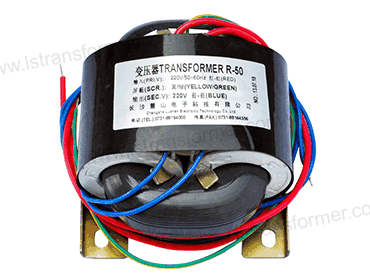
What are the performance characteristics of R-type transformers? R-type transformers exhibit exceptional performance in various applications due to their unique structure and material selection. The following are the main performance characteristics of R-type transformers: Peculiarity 1. Compact Size and Light Weight: R-type transformers featurean uncut ring-shaped core, which significantly reduces the transformer’s volume. The core is made from high-permeability silicon steel sheets, further optimizing the size and weight of the transformer. The absence of traditional cut lines minimizes material waste, making the transformer more compact and suitable for applications with limited space. 2. High Efficiency: The lack of cuts in the core significantly reduces core losses (also known as iron losses). Additionally,

FAQ

How is the AC magnetization curve defined for silicon steel sheets?

How is the AC magnetization curve defined for silicon steel sheets? Silicon steel sheets are widely used in power transformers and electrical machines, and their magnetic properties directly affect the efficiency and performance of the equipment. When studying the magnetic properties of silicon steel sheets, the AC magnetization curve (B-H curve) is a crucial concept and tool. So, how is the AC magnetization curve of silicon steel sheets defined? TheAC magnetization curve of silicon steel sheets is obtained by applying an alternating magnetic field to a demagnetized sample and gradually increasing the magnetic field strength. As the applied AC magnetic field increases, the peak value of the corresponding AC magnetic induction (magnetic

FAQ

どこでRコアトランスの大きい。

Where can R-core transformers be applied? R-type transformers, with their unique structure and performance characteristics, are widely used across various fields. The following is a detailed description of the main application areas and advantages of R-type transformers: Fields of application 1. Industrial Control: In industrial control systems, R-type transformers are frequently used due to their low no-load losses andexcellent isolation performance, providing a stable power supply. Their low noise and high power output effectively reduce electrical interference in control systems, ensuring system stability and reliability. Additionally, the low loss characteristics of R-type transformers minimize energy waste and enhance overall system efficiency. 2. Household Appliances: R-type transformers are also extensively used in household

FAQ

どのように切削加工には鉄芯が行なわれるのですか?

How is the cutting process of the iron core conducted? Thecore cutting process is crucial in transformer manufacturing, directly affecting the core’s performance and quality. To ensure the quality of the core during cutting, various technologies and methods are typically employed. The main cutting techniques include: Content 1. Wheel Cutting Process: (1) Wheel Selection:  For cutting transformer cores, a thin wheel with a grit size of 50 is commonly used. This type of wheel provides high cutting precision and efficiency, with a rotational speed controlled between 1400 and 3000 revolutions per minute to accommodate differentcore thicknesses and materials. (1) Fixing and Protection: During cutting, it is essential to firmly secure the

FAQ

その原因の部分放電断層をタップ変速機単体ですか?

What’s the Causes of Partial Discharge Faults in Tap Changers? Local discharge faults in tap changers can be caused by various factors, typically related to the deterioration of insulation performance, external overvoltages, and material quality issues. The following are some common causes: Reason 1. Deterioration of Insulation Performance: The insulation performance of a tap changer is fundamental to its normal operation. A decline in insulation performance can lead tolocal discharge phenomena. This deterioration is often due to prolonged use, environmental factors, aging, or inherent defects in the insulation material itself. As insulation performance deteriorates, local discharges increase, potentially leading to flashover. Flashover refers to electrical discharges forming arcs in insulation materials or

FAQ

何のメリットについての乾式トランスに比べて油入変圧器?

What are the advantages of dry-type transformers compared to oil-immersed transformers? Dry-type transformers offer a series of significant advantages compared to oil-immersed transformers, particularly in terms of safety, maintenance, space utilization, and environmental adaptability. Merit 1. Enhanced Safety: Dry-type transformers significantly reduce fire risk due to their use ofsolid insulating materials. In contrast, oil-immersed transformers, which usetransformer oil as an insulating medium, are susceptible to potential safety hazards such asoil leakage andoil aging. The insulating materials used in dry-type transformers, such as epoxy resin and polyester, are inherently fire-resistant. As a result, the risk of fire is greatly minimized even in the event of a transformer failure. This design feature makes dry-type transformers

FAQ

その用途高周波トランス?

What are the uses of high-frequency transformers? High-frequency transformers are specialized devices designed for the conversion of high-frequency electrical signals and play a crucial role in various fields and applications. The following is a detailed description of the main uses and functions of high-frequency transformers: Function: 1. Radio Transmitters and Receivers: High-frequency transformers are extensively used in radio communication equipment, particularly in the signal processing stages of transmitters and receivers. They are employed forsignal power conversion,impedance matching, andfiltering. By adjusting the transformer’s parameters, it is possible to enhance signal transmission efficiency and reduce signal loss.   2. Modems: In modems, high-frequency transformers are utilized to convert high-frequency modulated signals into

WhatsAppにQR WeChat QR sales@hnlsdz.com
スクロールトップ