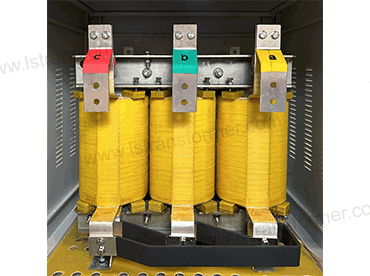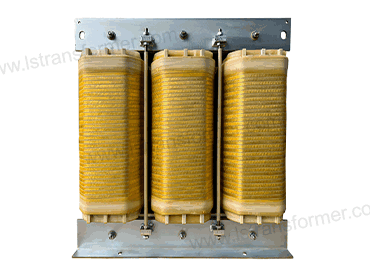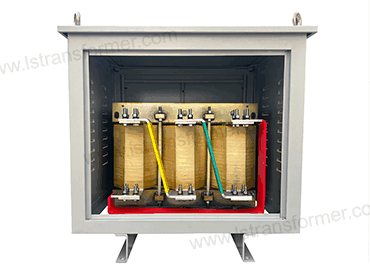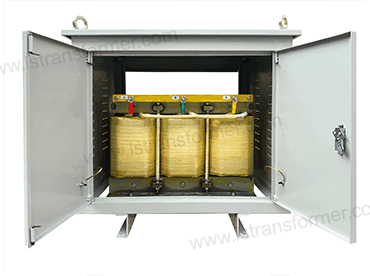






の電気安全性の距離トランス?

ホーム > FAQ > ページ 12
FAQ

の電気安全性の距離トランス?

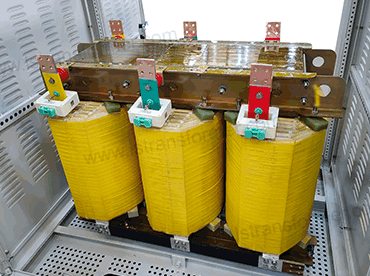
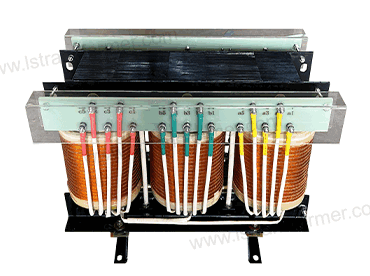
What Is the Electrical Safety Distance of Transformers? The electrical safety distance of transformers is a crucial factor for ensuring the safe operation of the power system and the safe operation of personnel. It involves considerations from multiple aspects and plays an extremely important role in maintaining the stability and safety of the entire power environment. Content 1. Comprehensive Consideration Factors for Safety Distance The electrical safety distance of transformers is not only focused on electrical safety itself. On the one hand, it is necessary to fully consider the requirements of electrical insulation to prevent dangerous situations such as electrical breakdown and discharge caused by too close a distance, ensuring
FAQ

その条件とはんだ接合部が巻きトランス?

What are the requirements for solder joints when winding transformers? In the winding process, the quality of solder joints is directly related to the performance and reliability of the entire winding assembly. Appropriate welding methods and strict requirements for solder joints are the key factors to ensure the stable electrical performance, sufficient mechanical strength, and long-term safe operation of winding products. The relevant requirements for solder joints include the following Content 1. Selection of welding methods For flat copper wires with a thickness less than 1.7 mm, lap welding is adopted. The lapped part is filed into a wedge shape and welded with silver-copper welding rods containing 15% silver. This welding

FAQ

どのような影響を与えるの線質においてトランス?

What Impact does Wire Quality have on Transformers? As a fundamental component of transformer windings, the quality of wire has a profound and crucial influence on the overall performance, operational reliability, and service life of transformers. High-quality wire can ensure the stable and efficient operation of transformers, while defective wire may lead to a series of serious problems. The following details the specific impacts: Content 1. Insulation Performance If there are quality defects such as sharp corners, burrs, or impurities on the wire surface, after being wrapped with turn insulation paper, these flaws can easily puncture the turn insulation, resulting in a local reduction of the turn insulation. When the transformer

FAQ

どのよう改善のための乾燥品質のトランス巻き線?

How to Improve the Drying Quality of Transformer Winding? The drying quality of winding plays a decisive role in the performance and reliability of electrical equipment such as transformers. High-quality drying treatment can ensure good insulation performance and stable dimensions of the winding, thereby guaranteeing the safe and stable operation of the equipment during long-term operation. To achieve high-quality winding drying, multiple key factors need to be comprehensively considered and effective measures should be taken. Content 1. Precise Control of Drying Temperature Drying temperature is one of the core elements affecting the drying quality of winding. An appropriate temperature can accelerate the evaporation of moisture in the insulating materials and improve

FAQ

何の目的でトランス巻き線乾燥?

What are the purposes of transformer winding drying? TransformerWinding are a crucial component of electrical equipment such as transformers, and their performance is directly related to the operational reliability and safety of the entire equipment. Winding drying is an extremely important treatment process with several key purposes. The specific purposes are as follows: Content 1. Improving electrical insulation strength Under normal circumstances, the insulating materials in windings contain a certain proportion (6% – 8%) of moisture. Under the action of an electric field, this moisture will ionize and conduct electricity, forming leakage current paths, thereby reducing the resistivity of the insulating materials and severely weakening their electrical insulation performance. When the equipment operates

FAQ

の損失のトランス?

What is the core loss of a transformer? The core plays a crucial role in electrical equipment such as transformers and motors, and core loss is an important factor that affects the performance and efficiency of these devices. Understanding the composition of core loss and its influencing factors has far-reaching significance for the optimal design, efficient operation, and energy conservation of the equipment. Content 1. Hysteresis Loss Hysteresis loss mainly stems from the material properties of silicon steel sheets. Different silicon steel sheets have different hysteresis loops, and the area enclosed by the hysteresis loop directly reflects the magnitude of the hysteresis loss. For high-quality silicon steel sheets, their hysteresis loops

FAQ

その理由を発生するノイズによるトランス?

What are the Reasons for the Noise Generated by Transformers? Transformers will inevitably generate noise during operation. Understanding the reasons for the noise is crucial for reducing noise, optimizing transformer performance, and ensuring the stable operation of the power system. The sources of transformer noise are relatively complex and can mainly be attributed to the following aspects. Content 1. Magnetostrictive Effect of Silicon Steel Sheets Silicon steel sheets are the main constituent materials of transformer cores. When the silicon steel sheets are magnetized, the magnetic domain molecules inside them will repeatedly expand and contract with the periodic changes of the magnetic field. This molecular movement at the microscopic level has a

FAQ

どの格付けが必要です。

What is rated capacity? Rated capacity refers to the conventional value of apparent power below the main tap. The capacity specified on the transformer nameplate is the rated capacity, representing the situation when the tap switch is at the main tap, i.e., the product of rated no-load voltage, rated current, and the corresponding phase factor. For three-phase transformers, the rated capacity is equal to √3 times the rated no-load line voltage times the rated line current, usually expressed in kVA or MVA. The rated capacity is the maximum capacity that can be continuously outputted throughout the specified entire normal service life, such as 30 years. The actual output capacity depends

FAQ

はどのような影響をもたらす絶縁高齢化においてトランス?

What impacts will insulation aging have on transformers? Transformers are crucial equipment in the power system, and their normal operation is of vital importance for ensuring the stability and reliability of power supply. The insulation system is an essential part of transformers. However, insulation aging will cause numerous impacts on transformers. Next, we will explore the corresponding impacts in depth. Content 1. Decline in Electrical Performance As the insulation ages, its insulation resistance decreases. This means that the leakage current inside the transformer increases, which may lead to the intensification of partial discharge phenomena. The energy generated by partial discharge will further accelerate the insulation aging, forming a vicious cycle.

FAQ

う可飽和炉? る分野で広く使われるのか?

What is a saturable reactor? In which fields is it widely used? A saturable reactor can be considered as a type of magnetic amplifier; in fact, it is a primary component of magnetic amplifiers. Its fundamental principle involves utilizing the saturation characteristics of ferromagnetic materials to control the reactance value of AC windings through minimal DC power, thereby regulating larger AC power. Consequently, a saturable reactor can be regarded as an electrical device and also viewed as a controllable reactor (controllable reactors being a category of emerging devices, such as controllable arc suppression coils and controllable parallel reactors). Generally, magnetic amplifiers without feedback are commonly referred to as saturable reactors.

WhatsAppにQR WeChat QR sales@hnlsdz.com
スクロールトップ